
Understanding Interoception: The Eighth Sense in Home Education
You ask your child, “How do you feel?”
“I don’t know.”
But ask a different question, and you may get a completely different answer.
“My stomach feels tight.”
“My legs feel jumpy.”
“My brain feels noodly.”
These descriptions give us a glimpse into something happening before a child identifies an emotion: the signals coming from inside their body. Noticing and interpreting these internal body signals is called interoception, sometimes referred to as our eighth sense.
Interoception can help children recognize hunger, thirst, pain, temperature, and the need to use the bathroom. But it also plays a role in recognizing emotions, understanding what their bodies need, and eventually advocating for themselves. And for homeschool families, there’s another fascinating connection to explore: the language children develop to describe what is happening inside their bodies.
What is Interoception
Interoception, sometimes called the “eighth sense,” refers to the process by which the nervous system senses, interprets, and integrates signals originating from inside the body. These signals might include hunger, thirst, pain, temperature, muscle tension, and internal emotional states like feeling anxious or calm. Neuroscientist Dr. Bud Craig, referenced directly in this episode, described interoception as “the sense of the physiological condition of our body,” and his research shaped much of how therapists now approach internal body awareness.
Developmentally, interoception forms the core of body-based self-awareness. Without it, noticing stress, fatigue, overwhelm, and even the feeling of safety becomes challenging. Many children struggle with “jumping” directly from bodily signals to behavior, without being aware of or able to name what is happening internally. This disconnect can result in meltdowns, withdrawal, or apparent “avoidance,” when in fact the child is simply overwhelmed by body-based cues they cannot interpret.
Body Signals Come Before Emotions
When a child is frustrated, overwhelmed, or upset, it is natural to ask, “How are you feeling?” But identifying an emotion actually requires several steps. Before a child can recognize an emotion, they first need to notice what is happening inside their body.
Kelly describes this as moving from body signal to emotion to action.
1. Notice the body signal
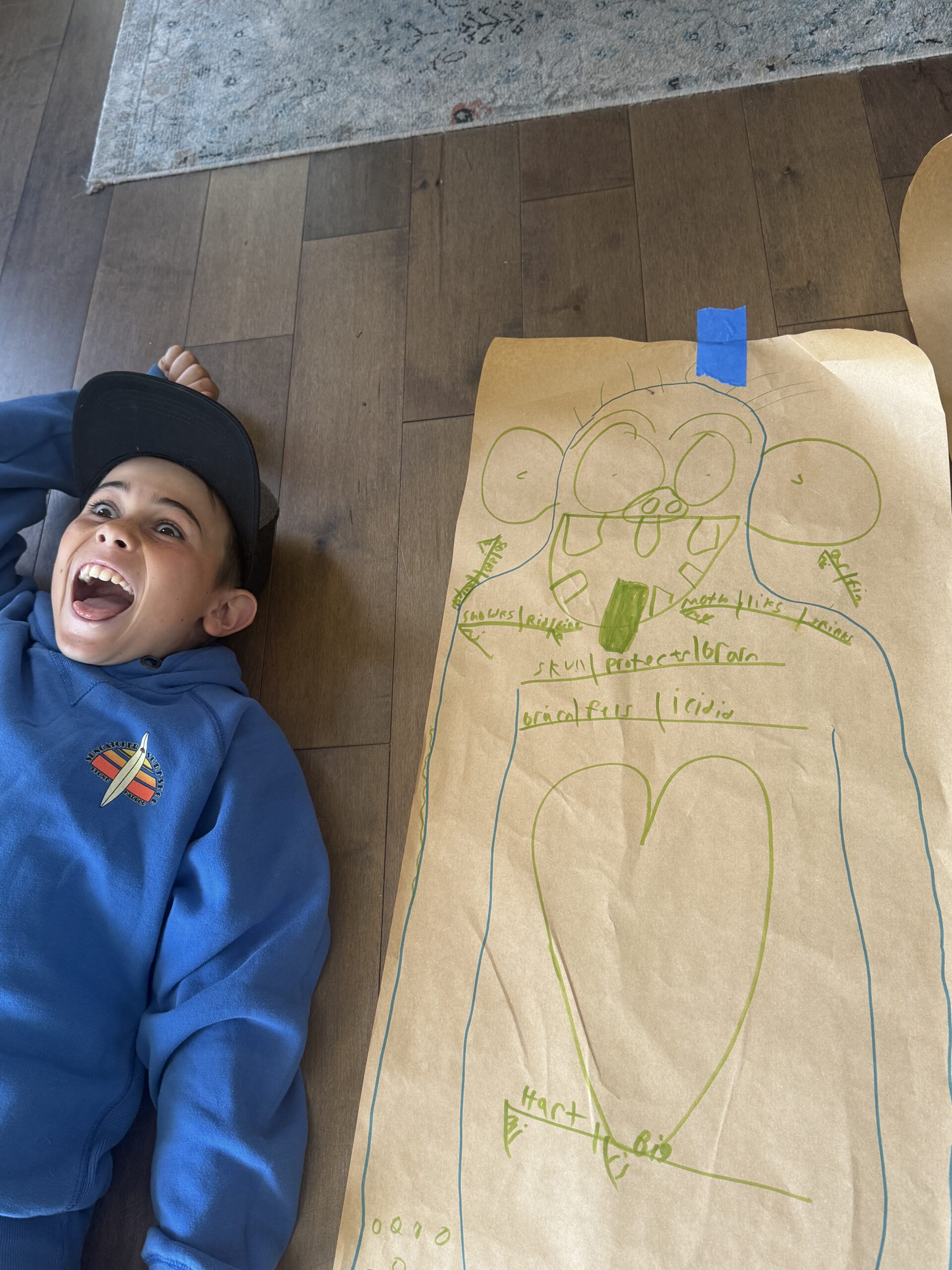
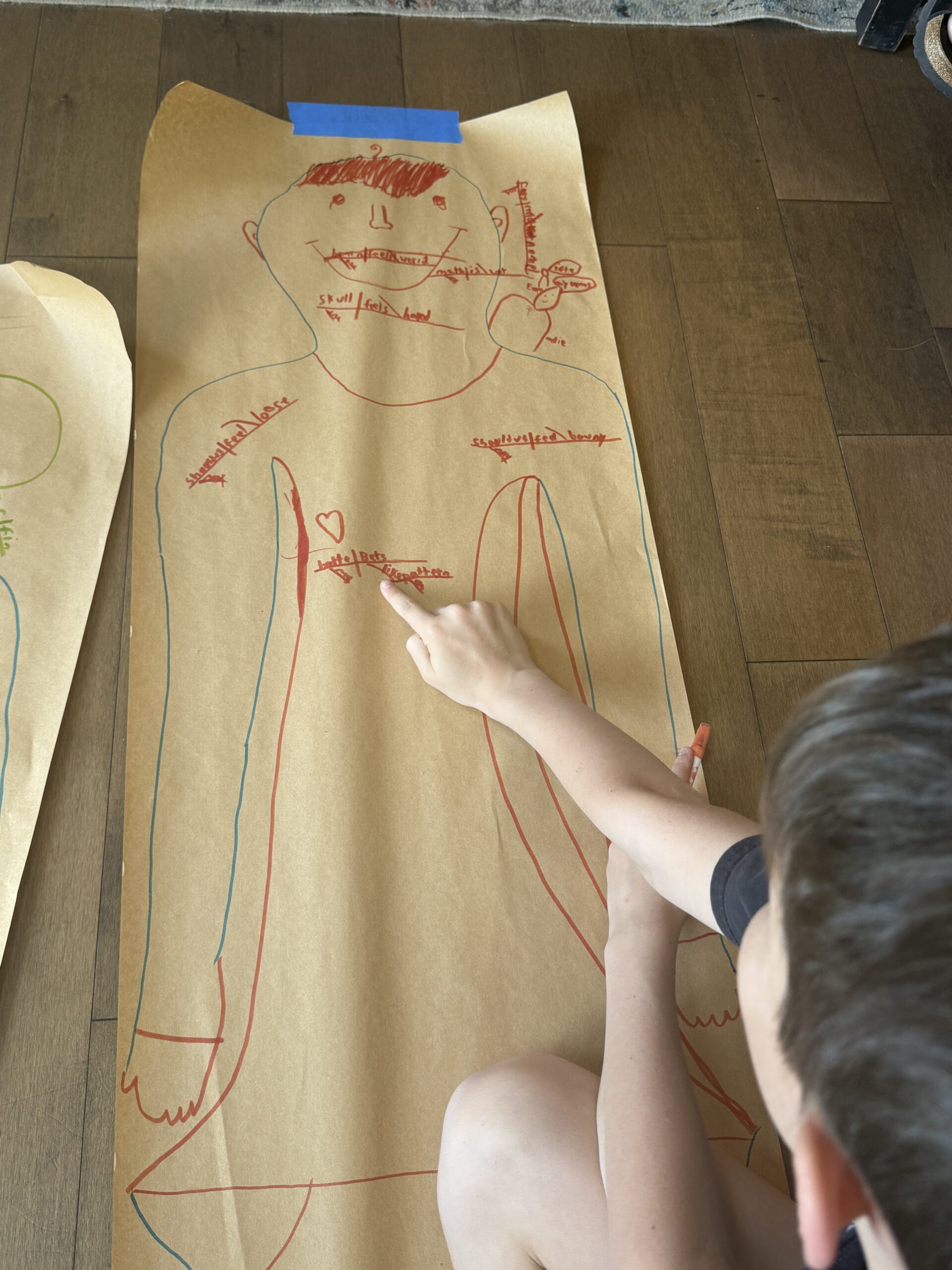
Start with what the body is actually experiencing. A child might notice a tight stomach, warm face, fast heartbeat, heavy legs, or even something completely unique like a “noodley” brain or “buzzy” tongue.
At home, instead of immediately asking, “How do you feel?” try getting curious about one body part:
“How does your stomach feel?”
“What do you notice about your hands?”
“What is your heart doing?”
There isn’t a correct word you are looking for. Your child’s description of their own body is valuable information.
2. Connect the body signal to an emotion
Once children begin noticing body signals, they can start exploring what those signals might mean.
A fast heartbeat does not automatically mean anxiety. That same body signal could happen when a child is nervous, excited, surprised, or running around outside.
Rather than supplying the emotion for them, stay curious. Over time, children can begin recognizing patterns between their own body signals and emotions.
3. Figure out what the body needs
This is where we often want to start.
We see a child struggling and immediately suggest taking deep breaths, getting a drink, going for a walk, or using another regulation strategy.
But when children become more aware of their own body signals, they can begin discovering what actually helps theirbodies. Kelly shared the example of a child who noticed a “buzzy” feeling on the back of his tongue when he was anxious. He discovered that quietly counting squares and rectangles in the room helped him regulate. That wasn’t a strategy an adult prescribed. It was one he discovered by understanding his own body.
This body signal → emotion → action progression is central to Kelly Mahler’s Interoception Curriculum, a resource I frequently recommend to families who want a more structured way to develop these skills.
How Interoception Can Build Language Skills
Interoception also gives us an interesting way to think about language development. When children begin noticing what is happening inside their bodies, they need words to describe those experiences. Their hands might feel cold, sticky, shaky, warm, tight, or even “noodley.” There does not have to be one correct adjective. In fact, some of the most useful descriptions may be words our children come up with themselves.
Think about the difference between saying, “My hand touches the water” and “My hand feels cold.” The first sentence describes what the hand is doing. The second requires a child to notice an internal body signal and find an adjective to describe it. For homeschool families, this creates a natural connection between interoception and the language arts skills we are already practicing, including descriptive vocabulary, adjectives, narration, and eventually writing.
Kelly described the relationship between interoception and language as a back-and-forth process. As children become more aware of their bodies, they may develop more language for describing their experiences. As they develop more language, they have more ways to communicate what they notice about their bodies.
You don’t need to turn this into another formal lesson. Start by getting curious about the words your child already uses. If your child needs a little help getting these conversations started, my Interoception Awareness Questions provide simple prompts you can use to explore body signals together.Scaffolding for Success
Helping Your Child Understand Their Own Body
Building interoceptive awareness takes time. Your child may notice that their stomach feels tight without knowing why. They may describe their brain as “noodley” or use a word that makes absolutely no sense to you at first. They may not have an answer at all.
That’s okay.
The goal isn’t to teach children the “right” way to describe their bodies. It’s to help them notice, get curious, and gradually discover what their own body signals mean.
As parents, we can model that same curiosity. We can talk about what we notice in our own bodies, ask questions without supplying the answers, and believe our children when they tell us about their internal experiences. Over time, those everyday conversations can give children language for understanding themselves and communicating what they need.
That is where interoception connects so beautifully with self-advocacy. Before a child can say, “I need a break,” “This room is too loud for me,” or “I need to eat before I can keep working,” they first have to notice what their body is telling them.
In your homeschool, you have countless opportunities to practice this without adding another subject to your day. Start with one body part. Notice together. Find some adjectives. Talk about what you discover.
You don’t need to have all the answers. Sometimes, “I wonder what your body is telling you?” is a very good place to begin.
The OT lens reminds us: Slow steps, built with care, are real progress. The invisible work you do every day, narrating, observing, and validating, grows deep roots. Even in the daily overwhelm, you are building your child’s capacity for understanding and advocating for themselves, one body signal at a time.
Listen: Interoception, Body Awareness, and Language with guest Kelly Mahler
Interoception is the sense that helps us notice and understand what is happening inside our bodies. We often associate it with hunger, thirst, or needing to use the bathroom, but interoception also helps us notice body signals connected to emotions, sensory experiences, regulation, and self-advocacy.
In this episode of The OT is IN, I talk with occupational therapist and interoception expert Kelly Mahler about helping children notice those body signals before asking them to identify an emotion or choose a regulation strategy.
We also explore a connection that is especially interesting for homeschool families: interoception and language development. When a child describes their hands as sticky, their chest as buzzy, or their brain as “noodley,” they are finding words for an internal experience. Those conversations can naturally connect with adjectives, descriptive language, narration, and the language arts skills you’re already practicing in your homeschool.
In this episode you’ll hear about:
- What interoception is and why it is often called the eighth sense
- Why interoception includes much more than hunger, thirst, and toileting
- The difference between noticing a body signal and identifying an emotion
- Why body signals come before choosing a regulation strategy
- How to respond when your child’s description of their body doesn’t make sense to you
- Why curiosity and validation matter when developing interoceptive awareness
- The possible connection between interoception, vocabulary, and descriptive language
- How narration can help children put their internal experiences into words
- Simple ways parents can model body awareness during everyday activities
- How interoceptive awareness can support self-advocacy
- Ways to approach interoception with older children and teens
- How Kelly Mahler’s Interoception Curriculum moves from body signals to emotions and individualized actions
Other OT is IN related episodes
- Make sure to join our OT INsiders Membership Here
- Why Should I Seek Occupational Therapy?
- Check Out Our Title Sponsor Lovevery
- Learning RX Website
- Episode 2: Decoding Behavior in homeschooling- sensory overwhelm, emotional control, perseverance
- Episode 13: Beyond the Five Senses: Understanding Your Child’s Interoceptive World with Cara Kosinski
- Episode 14: Outdoor Activities to Develop Interoception in Children with Guest Caroline Santangelo
- Episode 15: From Morning to Night: Incorporating Social Emotional Learning in Homeschool
- Episode 16: Navigating the Interoceptive Sense: Insights and Strategies for Parents
- Episode 72: Navigating Sibling Sensory Needs and Homeschooling Wins and Fails
- Episode 80: Raising Resilient Kids
A special thank you to Lovevery, the title sponsor of The OT is IN. I especially love the connection between today’s conversation and Lovevery’s Reading Skill Set. Learning to read involves more than decoding words. Children are also developing vocabulary, oral language, storytelling, and comprehension skills.
Interoception gives us another opportunity to build that language. As children learn words to describe what they notice inside their bodies, they are practicing descriptive vocabulary while also developing greater awareness of their own experiences. Those same conversations can carry over into storytelling, narration, and understanding the experiences of characters we meet in books.
You can learn more about Lovevery’s Reading Skill Set and its play-based approach to developing reading and language skills here.
Connect With Our Guest, Kelly Mahler
Kelly Mahler is an award-winning occupational therapist, author, and interoception groupie known for her boundless curiosity and empathetic approach. Holding a Doctorate in Occupational Therapy, she has served school-aged children and adults for over 22 years. Kelly is author of 12 resources including The Interoception Curriculum, now used in over 30 countries worldwide. She enjoys speaking internationally on interoception, neuro-affirming practices, and playful strategies for inner exploration using a lens of curiosity, validation and empathy.


