
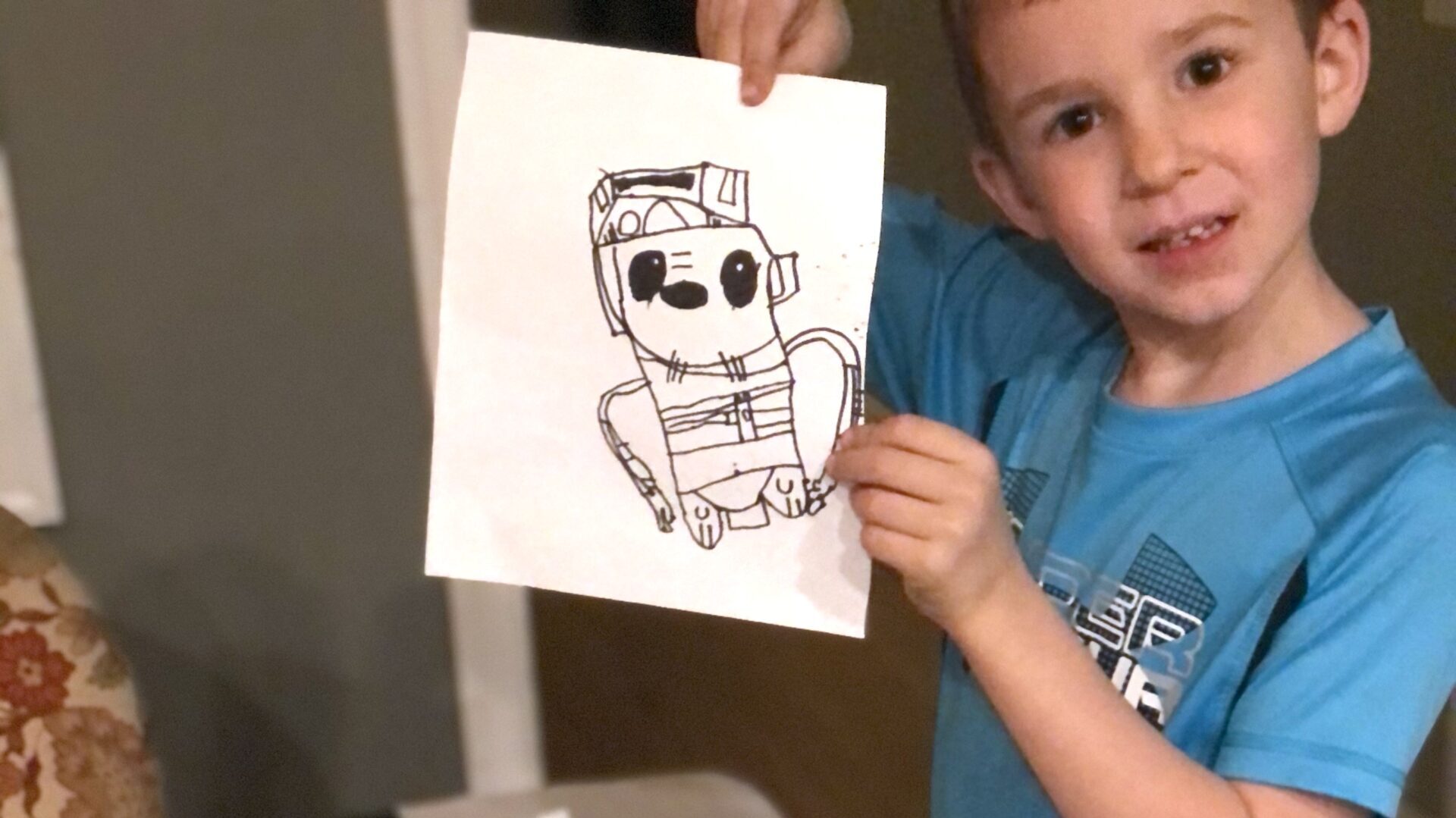
Why is handwriting hard for my child?
Handwriting is one of the easiest homeschool struggles to notice. The finished work is right in front of us.
We can see when letters are difficult to read, words drift off the line, spacing is inconsistent, or a short assignment takes far longer than expected. We may also notice sighing, stalling, fatigue, or complete resistance when the pencil comes out.
This often leaves parents asking, “Why is handwriting hard for my child?”
The answer is rarely as simple as needing more practice.
Handwriting requires multiple systems to work together. When one part of the process demands extra effort, the entire writing task may become tiring or frustrating.
Handwriting is more than a fine motor skill
Because children hold pencils with their hands, we naturally think first about pencil grip and fine motor strength. Those skills matter, but they are only part of the handwriting puzzle.
Writing can involve:
- posture and body stability
- shoulder, arm, hand, and finger control
- motor planning
- functional vision and visual perception
- attention and working memory
- language and idea generation
- sensory and emotional regulation
- motivation
- the demands of the assignment and environment
These systems interact. There is not one universal starting point for every child.
Our first job is to observe what happens during a meaningful writing task. That helps us move from trying random handwriting activities toward choosing support that matches the barrier. Lets look at 6 aspects that may affect handwriting and the questions parents can ask as they observe their child.
Consider the Task and the Environment
Before deciding how to help, consider what your child is actually being asked to do.
Copying a sentence requires different skills than creating an original paragraph. Filling in one word on a worksheet is different from taking notes during a lesson. Writing a birthday card may feel very different from completing copywork.
Ask yourself:
- Does the difficulty begin before writing starts?
- Can my child explain an answer verbally but struggle to write it?
- Is copying easier than generating original ideas?
- Does the writing become harder or less legible over time?
- Does changing the position, paper, pencil, or amount of writing help?
- Is the task meaningful to my child?
These observations give us more useful information than neatness alone.
Observe Posture and Stability
The body provides support while the hands complete precise work.
You may notice your child leaning heavily on the table, wrapping their feet around the chair, resting their head on one hand, changing positions frequently, or avoiding seated work.
These behaviors do not automatically mean that your child lacks core strength. They may indicate fatigue, discomfort, sensory needs, attention demands, or an environment that does not fit the child well.
Try observing your child in different positions. They might write while standing at a vertical surface, lying on their stomach, sitting with their feet supported, or using a clipboard in a comfortable location.
Activities such as climbing, crawling, carrying, pushing, pulling, and playing on playground equipment can support the physical skills used during writing. Learn more about building strength and stability for handwriting However, children also need opportunities to practice handwriting itself. Movement and direct instruction work together.
Look Beyond Pencil Grip and Fine Motor Skills
There is no single perfect pencil grip for every child.
A functional grip allows a child to control the pencil, see what they are writing, and complete the task without unnecessary pain or fatigue.
Fine motor skills can develop through meaningful activities such as:
- cooking and using kitchen tools
- building with small construction toys
- sewing, weaving, and other handicrafts
- using tweezers or tongs
- working with clay or dough
- drawing, coloring, and doodling
- fastening clothing and completing daily routines
Rather than adding isolated exercises simply because handwriting is difficult, consider what your child enjoys and which activities support the skills you have observed. For a broader look at how fine motor development grows through everyday life, explore Reading, Writing, and Growing: The Bigger Picture of Fine Motor Skills.
Remember That Vision Is More Than Eyesight
A child can have 20/20 eyesight and still experience visual challenges during writing. Vision involves much more than visual acuity.
Handwriting may require the eyes to track across a page, shift between a book and paper, maintain focus, find a place after looking away, and interpret visual information accurately.
Possible signs of difficulty may include:
- frequently losing their place
- skipping words or lines while copying
- rubbing their eyes
- complaining of tired eyes or headaches
- moving very close to the paper
- struggling to organize writing on the page
- avoiding visually demanding work
Simple activities such as puzzles, hidden pictures, outdoor play, ball games, and “I Spy” can offer helpful visual experiences. Paper placement, line spacing, contrast, and the amount of information on a page can also affect performance.
Persistent concerns may warrant an evaluation from an appropriate vision professional.
Consider Executive Functioning and Idea Generation
A child may be physically capable of forming letters and still find writing extremely difficult.
Writing requires children to begin the task, remember their idea, organize information, choose words, monitor their work, and continue until they are finished.
Some children know the answer but cannot decide how to begin. Others lose their thought while concentrating on letter formation. A child may write easily when copying but become stuck when asked to create an original sentence. If generating ideas is part of the struggle, this conversation with Julie Bogart offers encouragement for helping children develop confidence and personal expression.
Helpful supports might include:
- talking through ideas before writing
- using narration
- making a short word bank
- drawing before writing
- providing a sentence starter
- breaking the assignment into smaller parts
- separating handwriting practice from content learning
If the goal is to demonstrate understanding, your child may be able to respond verbally, type, dictate, draw, or use another form of communication. Handwriting can then be practiced separately in an amount that supports growth without blocking access to the lesson. If the goal is to demonstrate understanding, your child may be able to respond verbally, type, dictate, draw, or use another form of communication. Learn more about balancing handwriting and technology in your homeschool.
Pay Attention to Sensory and Emotional Regulation
Writing struggles can become emotional, especially when a child has experienced repeated frustration.
Resistance does not automatically mean laziness or unwillingness to learn. It may communicate that the task feels too difficult, unpredictable, tiring, or disconnected from anything meaningful.
Notice what happens before, during, and after the task. Consider the environment, the amount of writing, the timing of the lesson, and your child’s physical and emotional state.
Then choose one small adjustment and observe what changes.
Choose One Manageable Next Step
Parents do not need to address every part of handwriting at once.
Begin with one writing activity that matters in your homeschool. Observe your child without immediately correcting every part of the finished product.
Then ask:
- What is the purpose of this task?
- Where does the difficulty begin?
- Which barrier appears to be getting in the way?
- What is one support we can try?
- What changes after we try it?
Your child’s handwriting may not change overnight, but careful observation can help you make more purposeful decisions.
Celebrate progress, including progress that is not immediately visible on the page. Asking for help, sharing an idea verbally, tolerating a short writing task, or recognizing that a particular tool helps are all meaningful steps.
Want Help Putting the Pieces Together?
Making Sense of the Handwriting Puzzle is a self-paced course created for homeschool parents by an occupational therapist and homeschool mom.
The course will help you:
- observe the whole child during writing
- understand possible handwriting barriers
- learn about dysgraphia
- select practical strategies and tools
- balance skill development with accommodations
- make thoughtful decisions about assistive technology and AI
You will also receive The Pieces to the Handwriting Puzzle observation guide to help you connect what you are learning with one meaningful writing activity in your homeschool.

OT is IN #24: Understanding the Handwriting Journey: Tools and Techniques for Homeschoolers
In this episode of The OT is IN, I explore the many skills involved in handwriting and explain why handwriting difficulties are rarely solved by additional pencil practice alone.
We consider visual skills, posture and stability, fine motor control, cognition, and executive functioning. You’ll also hear practical ideas for observing and supporting handwriting within your homeschool.
In This Episode, You’ll Hear About:
- why handwriting struggles are so noticeable
- the interacting systems involved in writing
- posture and stability during handwriting
- functional pencil grips
- meaningful fine motor activities
- visual tracking, fixation, and convergence
- visual perception
- attention, organization, and working memory
- practical environmental adaptations
- balancing movement with direct handwriting instruction
- identifying a purposeful next step
Links and Resources
- Watch this episode with slides
- Making Sense of the Handwriting Puzzle
- Why Should I Seek Occupational Therapy?
- Primitive Reflex Guide from Homeschool OT
- Beyond 20/20 Vision: Understanding Visual Assessment in Children
- The Great Outdoors, Visual Development, and Learning
- How Form Drawing Supports Vision, Handwriting, and Academics
- Vision and Homeschool Handwriting Success
- Supporting Children Through Play-Based Reflex Integration
- How to Improve Handwriting Without Writing
- The Skills Nature Builds


