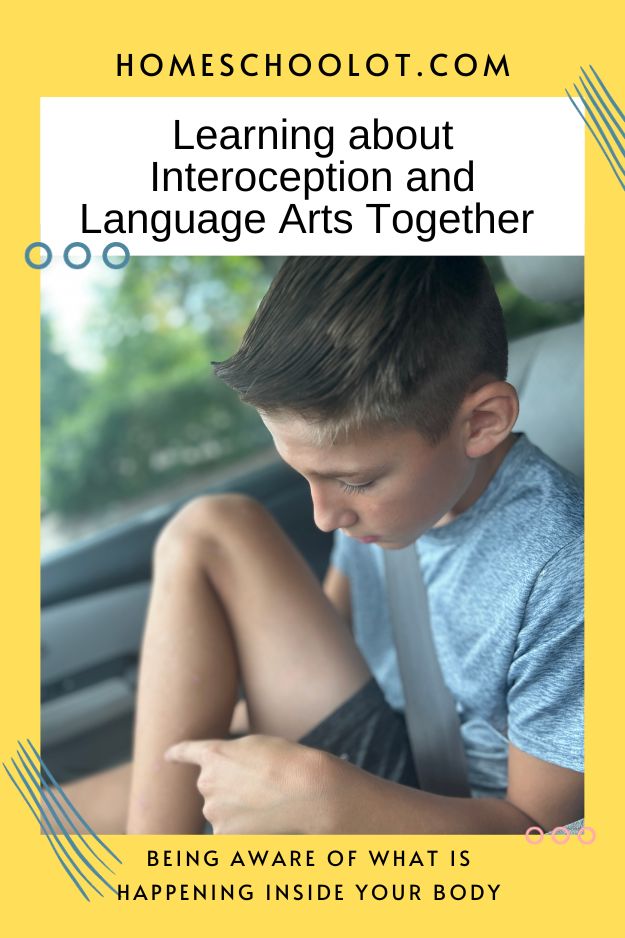

Learning about Interoception and Language Arts Together
As homeschoolers, we know that learning doesn’t just take place in a classroom. We learn in all aspects of life. But, have you ever thought about the significance of teaching them to understand and describe their own bodies? It’s an essential skill that not only enhances their understanding of their interoception sensory system but also requires the use of language, particularly adjectives. How would you say you feel hungry, tired, achy, nauseous, mad etc etc etc without adjectives?
Adjectives are the building blocks of vivid and detailed descriptions. Start with books about adjectives. Sandra Boynton has an alphabet book about adjectives that is great for little ones . Brian Cleary has excellent picture books about all parts of speech for elementary aged kids .
Then, as your kids grow, carry adjectives over to other areas. Ask them to describe the feelings of characters in books, the beauty of nature, or the excitement of a sports game. Adjectives enrich their language and stimulate their imaginations. It’s a skill that goes beyond the “language arts lesson” sets them up for success in various areas of life.
Applying Descriptive Language to the Body
Once children have honed their skills in using adjectives, it’s time to apply them to a subject that’s always close to them: their own bodies. Encourage them to express how they feel physically using descriptive words. These internal feelings are their interoception sense, one of the 8 senses.
This not only helps them articulate their sensations but also promotes a deeper understanding of their own well-being. Whether it’s describing the thrill of a race, the calmness of meditation, or the fatigue after a long day, using descriptive language can foster a healthy connection between their minds and bodies.
Learning on Multiple Levels
Teaching kids to describe their bodies isn’t just about language; it’s about holistic learning. By engaging in descriptive exercises, children are learning on multiple levels. They’re enhancing their language skills, understanding their interoception sense, and developing empathy as they learn to understand and communicate their feelings. This approach empowers them to navigate life’s challenges with better self-expression and emotional intelligence.
Learning truly is everywhere, and helping our children learn about their bodies is no exception. Encouraging them to practice describing the world around them with adjectives is the first step. Then, applying this skill to express how their bodies feel allows them to build a deeper connection with themselves. As parents and caregivers, we can trust that we are nurturing their growth and learning on various levels. So, let’s empower our children with the gift of descriptive language and watch them flourish not only in their words but also in their understanding of themselves.