
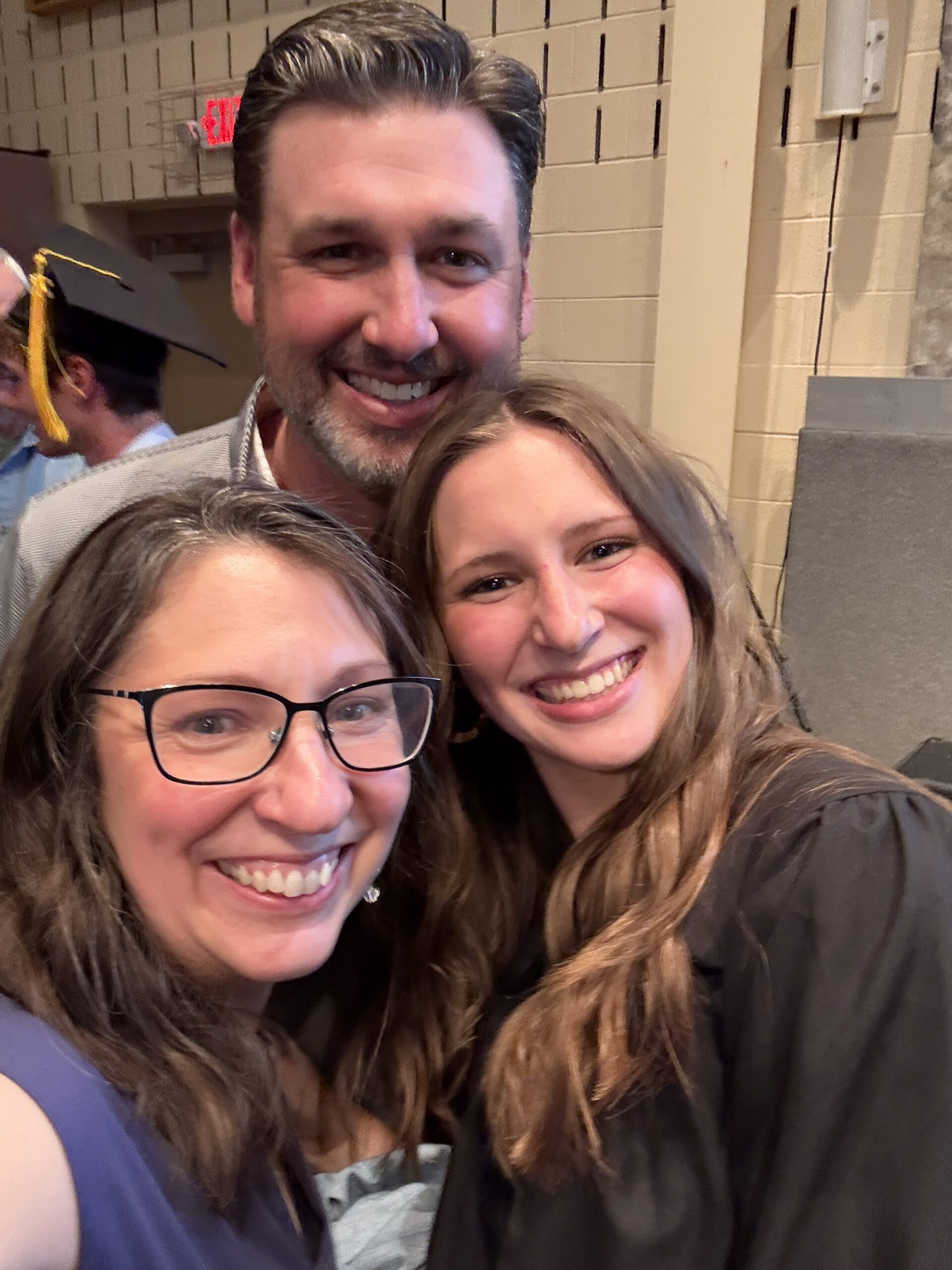
How Do You Know If Homeschooling Is Working? Lessons from a Homeschool Graduate and a Skeptical Dad
One of the hardest parts of homeschooling is that there isn’t always a report card for the things that matter most.
You can measure math facts, spelling words, or reading levels, but how do you measure confidence? Independence? Responsibility? The ability to make friends, solve problems, or manage your own time?
Those are often the very reasons families choose homeschooling, yet they’re also the hardest outcomes to recognize while you’re living through them.
For the 100th episode of The OT is IN podcast, I decided to do something a little different. Instead of interviewing another expert, I invited the people who have lived this homeschool journey with me: my husband, Brandon, my daughter Annabelle, who recently graduated from our homeschool, and my youngest son, Rhys. Listening to their perspectives reminded me that some of the greatest growth isn’t obvious until you stop and look back and that is how we really know if homeschooling is working.
When You’re Wondering If Homeschooling is Working
If you’ve ever asked yourself…
- Are we doing enough?
- Is my child falling behind?
- Will they be prepared for college?
- Are they missing out on friendships?
- Am I making the right decision?
…you’re in good company.
Those weren’t just questions I heard from other parents. They were questions inside our own home.
When we first decided to homeschool, Brandon was supportive—but cautious. He wondered whether our children would miss important milestones or opportunities that came with a traditional school experience. He questioned whether they would be prepared for adulthood.
Years later, his perspective looks very different.
Not because there was one magical moment when everything clicked.
But because he watched small moments of growth accumulate over time.
One Family’s Story of Homeschool Success
One of my favorite parts of this conversation was hearing Brandon describe what surprised him most after nearly ten years of homeschooling. Early on, he worried about what our children might miss. Looking back, he realized homeschooling wasn’t about recreating public school at home. It was about creating an education that fit each child.
That flexibility changed the way we approached learning. Instead of expecting every child to move through the same curriculum at the same pace, we were able to adjust as their needs changed. Sometimes that meant slowing down. Other times it meant diving deeper into an area of interest or providing opportunities that simply wouldn’t have fit into a traditional school schedule.
As Brandon reflected, some of the greatest benefits of homeschooling came from being able to:
- Spend extra time strengthening difficult subjects without worrying about keeping pace with a classroom.
- Encourage each child’s interests instead of expecting everyone to follow the same path.
- Adjust curriculum when something wasn’t the right fit, rather than sticking with it simply because we’d already started.
- Create space for experiences like dual enrollment, work, travel, sports, and service opportunities that became part of our children’s education.
- Focus on developing capable, independent young adults instead of simply completing another grade level.
One thing Brandon said really stuck with me: we didn’t waste time making our children fit a system. We used homeschooling to build a system around our children. We learned how to accept our children for who they are and expect growth. The OT is IN podcast episode 86 explains more about this concept and this guide will help you apply it in your own homeschool.
As parents, it’s easy to feel like changing curriculum or adjusting our plans means we’ve made a mistake. In reality, those changes often mean we’re paying attention. One of homeschooling’s greatest strengths is the freedom to course-correct as our children grow and their needs change.

What About Socialization?
But What About Socialization?
This is usually the first question homeschool families hear.
The interesting part is that my kids rarely think about socialization the way adults do.
Annabelle laughed as she shared that people were often surprised to learn she was homeschooled because she seemed “so normal.”
The truth is, friendships looked different than many people expected.
Church.
Hockey.
Co-op.
Work.
Dual enrollment.
Neighbors.
Instead of spending every day with the same group of classmates, our children built relationships through multiple communities.
As an occupational therapist, I think that’s worth remembering.
Social participation isn’t measured by where friendships happen. It’s measured by whether children are learning to communicate, collaborate, solve problems, and build meaningful relationships.
For our family, homeschooling gave us flexibility to create those opportunities in ways that fit each child. This article explains a little more about the pressures of social skills outside of the home.
Preparing for College Looks Different Than You Might Expect
One of the biggest surprises came after Annabelle graduated. Like many homeschool parents, we wondered whether she would be prepared for college academically and personally. Looking back, we realized that homeschooling had been preparing her all along, often in ways we didn’t fully appreciate at the time.
Academically, she entered college with nineteen credits already completed through dual enrollment. But what impressed me even more wasn’t the number of credits she had earned. It was the confidence she had developed in managing her own learning. Throughout high school, homeschooling gradually gave her more ownership over her schedule, deadlines, and responsibilities. By the time she graduated, she wasn’t just ready for college coursework; she was ready to navigate the independence that college requires.
As an occupational therapist, I often remind parents that success after graduation is about much more than academic achievement. It’s also about executive functioning skills like planning, organization, time management, and self-advocacy. Those skills are built over years of practice, not in a single class or curriculum. Homeschooling gave us the opportunity to gradually hand over responsibility as Annabelle matured, allowing her to develop confidence in managing both her education and her daily life.
Preparation for adulthood doesn’t always follow the same path for every student. For our family, homeschooling created the flexibility to develop those life skills alongside academics, helping Annabelle step into college feeling prepared not just to succeed in the classroom, but to thrive independently. You can read more from Annabelle’s perspective in this blog about executive functioning and planning
Sometimes the Smallest Perspective is the Most Important
One of my favorite moments in the conversation came from Rhys.
While the adults reflected on graduation, college, and long-term outcomes, his favorite part of homeschooling was much simpler.
He liked the flexibility.
Kids often notice different things than adults. While we’re worrying about transcripts and milestones, they’re noticing family read alouds, slower mornings, extra hockey practices, afternoons at the park, or simply having time to pursue something they love. Sometimes those ordinary moments become the memories they carry with them.
As an Occupational Therapist, Here’s What I Notice
As an occupational therapist, I don’t evaluate a homeschool by asking whether a child is exactly on grade level or whether every lesson went according to plan. Instead, I’m looking for patterns of growth over time. When I think back on our own homeschool journey, these are the signs that tell me learning is happening—even when it doesn’t always feel like it.
- Increasing independence. Is your child taking ownership of more responsibilities than they did a year ago? This might look like packing their own backpack, completing assignments with fewer reminders, managing a planner, or beginning to solve problems before asking for help. If your teen is struggling in this area, check out the Executive Functioning for Teens course.
- Growing confidence. Confidence doesn’t mean a child never struggles. It means they’re willing to try, make mistakes, and keep going. Look for a child who says, “I’ll give it a try,” instead of immediately shutting down.
- Executive functioning skills. Planning, organization, time management, and self-monitoring develop gradually. If your child is becoming more capable of managing their schoolwork, chores, activities, or daily routines, those are meaningful signs of progress.
- Meaningful relationships. Rather than counting the number of friends your child has, ask whether they are learning to communicate, cooperate, resolve conflicts, and build relationships with people of different ages and backgrounds.
- Participation in everyday life. Occupational therapists care deeply about participation. Is your child becoming more engaged in family life, hobbies, church, sports, work, volunteering, or other meaningful occupations? Those experiences are just as important as what happens during formal school hours.
- A willingness to adapt. One of the greatest strengths of homeschooling is the ability to course-correct. If you recognize something isn’t working and make thoughtful changes, that isn’t failure—it’s one of the greatest advantages of personalized education.
The truth is, homeschooling success is rarely measured by one test score, one curriculum, or one perfect school year. More often, it’s revealed in hundreds of ordinary moments that slowly shape your child into a capable, confident, and independent young adult.
If you’re wondering whether homeschooling is working, don’t just look at today’s assignment. Look at who your child is becoming. Sometimes the clearest evidence of growth isn’t found by looking ahead—it’s found by looking back.

OT is IN #100: What I Wish I Knew When I Started Homeschooling- Dad Version
If you have ever wondered whether you’re meeting all your child’s needs as a homeschool parent, or worried that you might miss out on something important by doing things differently from traditional school, this conversation is for you.
Today we’re examining what success actually looks like in homeschooling, especially when it doesn’t follow the standard playbook. In our family, hallmark milestones have looked different, friendships grow from unexpected places, and learning shifts as needs change. As we talk through questions like socialization, academic benchmarks, and what it means to “do homeschooling right,” you’ll hear how our expectations have changed—and why that change brings relief, not regret.
This topic matters for homeschoolers because so many decisions are shaped by assumptions about what is normal and necessary. When we let go of rigid timelines and the pressure to replicate school, it creates space to focus on strengths, support challenges, and personalize the learning journey—without losing sight of connection or growth.
In this episode you’ll hear about:
- Introduction and Family Introductions
- Initial Perceptions and Misconceptions About Homeschooling
- Frequent comment: “But you’re so normal”
- Misunderstandings and mind shifts about homeschooling from others
- Responses to social perceptions (e.g., from sports teammates)
- Need or lack thereof to justify being homeschooled
- Skepticism and Early Concerns from the Homeschool Dad
- Brandon Collins’ initial skepticism and concerns
- Reflection on Years of Homeschooling and Perspective Changes
- Nine years of homeschooling experience
- Evolution from skepticism to happiness with the process
- Differences between homeschool ‘milestones’ and public school experiences
- Student Experience: Socialization, Friendships, and Opportunities
- Annabelle’s sources of friendship (church, co-ops, sports)
- Unique opportunities available due to homeschooling (early college credits, job flexibility)
- Flexibility and Customization in Homeschooling
- Surprises and realizations about flexibility in scheduling and learning
- Vacations and educational opportunities outside of traditional school schedules
- Sports and extracurricular participation as a homeschooled student
- Adapting Curriculum and Parental Approaches
- Non-traditional, tailored approach (not just recreating public school at home)
- Adapting and switching between different educational programs and methods
- Student thoughts on curriculum changes and accommodations
- Family Dynamics and Practical Moments
- Deeper Challenges and Difficulties in the Homeschooling Journey
- Parental patience and encouragement (mantras, support)
- Preparation for College and Life Skills
- Personal organization and spreadsheet skills
- Flexibility in rescheduling and managing workload
- Final Thoughts and Advice to Other Families
- Brandon Collins: Encouragement to trust the process, patience, and the value of course correction
Links and Resources From Today’s Show
- Why Should I Seek Occupational Therapy?
- Connect with Sarah Collins on IG
- The Homeschool OT Teachers Pay Teachers
- Join The OT Insiders
- Check Out Our Title Sponsor CTC Math
- CTC Math Free Trial
- Episode 8: Beyond the Pencil: Exploring Vision’s Impact on Homeschool Handwriting Success
- Episode 13: Beyond the Five Senses: Understanding Your Child’s Interoceptive World with Cara Kosinski
- Episode 23: Blending Sensory Integration and Fitness for Better Handwriting
- Episode 29: Parenting with Co-Regulation
- Episode 61: Mindful Moments: Supporting Focus and Calm in Children
- Episode 72: Navigating Sibling Sensory Needs and Homeschooling Wins and Fails
- Episode 75: Teaching Kids Healthy Habits: Building Lifelong Wellness
- Episode 81: Understanding Social Pressures and Masking in Kids
Thank you to our title sponsor for this episode, CTC Math. You can check out their FREE trial here.
Connect With Our Guest, Brandon Collins
Brandon is my husband and the wonderful father to our children. You can connect with him here at Sarah@homeschoolot.com