

Reframing Homeschooling: Embracing Flexibility, Connection, and Growth as a Family
Are you feeling overwhelmed by expectations, comparing your homeschool to others, or just searching for a way to make your days more joyful and meaningful? Whether you’re brand new to homeschooling or a seasoned parent, this is packed with wisdom, encouragement, and practical strategies.
Most Parents First Step Into Homeschooling
We all envision structure—maybe even something that looks suspiciously like a traditional classroom inside our living room. Perhaps, like Kelly Edwards, you set up desks, a grade book, recited the Pledge of Allegiance, and expected the school day to run from nine to three. Maybe you even purchased a boxed curriculum and planned to check off every box, every single day.
But reality, as it often does, will gently (or not so gently) nudge you in another direction.
Picture the first days of homeschooling: children bustling with energy, possibly resistant to spelling tests, some clinging to a craft you hoped would be educational, others innovatively using your mitochondria candies as a snack, and you, the ever-dedicated parent, clutching your plans for dear life. The truth: rarely does a school day unravel as planned, and that’s not only normal—it’s where the real growth and learning begin.
Permission to Pivot: Letting Go of Expectations
Kelly reminisced about the early days—trying to do everything “right” and soon realizing that what works for one family, one child, or one day, might not work for the next. This doesn’t mean you’re failing; it means you’re recognizing your children’s unique needs and honoring the reality of your family.
The secret? Check your expectations at the door. Each homeschool day will look different, and even the best-laid plans will require frequent pivots. Sometimes the craft morphs into process art, and sometimes the spelling test is better left behind. Instead of aiming for perfection, allow yourself to drop what isn’t working and follow the path of least resistance—sometimes, as Kelly shared, “resistance is the roadmap.”
Connection Over Curriculum: Why Presence Matters Most
What if the heart of homeschooling is not just academics, but connection and emotional growth? Kelly highlighted that the hardest—and most rewarding—part of homeschooling is not the math or science, but the daily emotional load: navigating sibling squabbles, managing your own nervous system, and building relationships.
When you feel overwhelmed, take a breath, and let your children see you model self-care and emotional regulation. Need five minutes alone? Ask for it. Everyone melting down? Have a pillow fight or a dance break—regulation before instruction. These moments of authenticity and adaptation are not just survival strategies; they are social-emotional lessons your kids will carry for life.
Structure as a Scaffold: The 90-Minute School Day Mindset
If your brain craves some structure, you’re not alone. Kelly created the “90-Minute School Day” not as a rigid schedule, but as a gentle framework to nurture core academic skills (reading, writing, math) and rich content learning in bite-sized segments—intermixed with nature walks, household problem-solving, or even learning American Sign Language with a neighborhood friend.
The beauty of this approach is its adaptability. Some days, “school” happens in short, intentional bursts; other days, it’s woven seamlessly into daily life through conversation, collaborative problem-solving (like fixing the slip and slide), and family storytelling. Over time, this rhythm becomes second nature.

Encouragement for Every Step of the Journey
For those just beginning, or those feeling stuck in comparison or self-doubt: know that every homeschool is different, and there is no single “right” way. The greatest gift you can give your children (and yourself) is the permission to experiment, adapt, and find joy in being together. As you do, you’ll be cultivating not only readers, writers, and thinkers—but resilient, connected, and self-aware humans.
So pour yourself that cup of coffee, let go of perfect plans, and watch your kids push glue and paper, invent new solutions, and build relationships—not only with each other, but with you. That—more than any curriculum—will be the legacy of your homeschool.
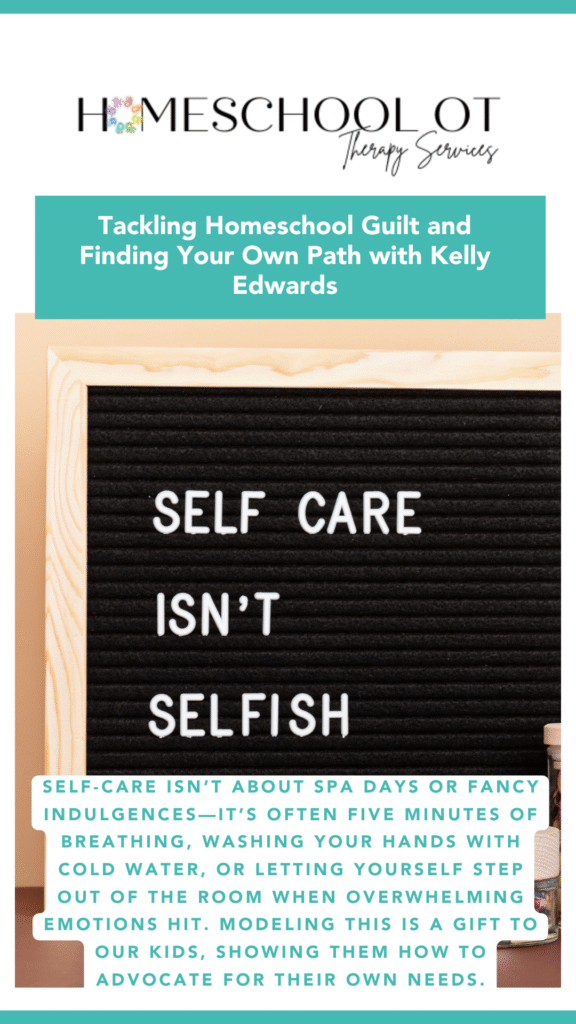
OT is IN #70: Tackling Homeschool Guilt and Finding Your Own Path with Kelly Edwards
Kelly Edwards, a homeschool parent and creator of the 90 Minute School Day framework shares how early in her own homeschooling journey, Kelly’s insights from podcasts and social media were a guiding light. We dive into Kelly’s unexpected beginnings with homeschooling, the challenges she faced as a foster and adoptive parent, and how her journey evolved from recreating a traditional classroom at home to gradually letting go of rigid expectations. Kelly opens up about navigating the unique needs of her neurodivergent children, the process of deschooling, and the internal work necessary to truly embrace homeschooling freedom.
You’ll also hear practical strategies for self-care as a homeschool parent, balancing sibling relationships, and what a day in the life looks like using Kelly’s 90 Minute School Day approach. Whether you’re brand new to homeschooling or looking for reassurance and inspiration, this is full of honesty, encouragement, and actionable advice.
In this episode you’ll hear about:
- The start of homeschooling: Not originally planned.
- Early exposure to homeschooling through a friend.
- Becoming foster and adoptive parents in West Virginia.
- Specific family needs leading to the decision to homeschool.
- Daughter’s academic, social, and emotional needs not fully met in traditional school.
- Desire to build stronger family bonds and attachment.
- Attempt to replicate traditional school at home (gradebooks, schedules, pledge, etc.).
- Realizing the Need for Flexibility
- Letting go of unnecessary routines and structures.
- Dropping unneeded activities (e.g., spelling tests).
- Navigating self-doubt and seeking validation from others.
- Advice from Akilah Richards (“resistance is the roadmap”) and what that means in practice.
- Identifying and responding to resistance points in homeschooling.
- Transition Toward Deschooling
- Understanding “behavior as communication.”
- Gradually dropping what didn’t work; picking up what did.
- Moving from strict frameworks to intuition and permission.
- The importance and discomfort of making individualized choices.
- Challenges of Homeschooling
- Navigating neurodivergence within the family.
- Evolving as a parent and the grief of changed expectations.
- Managing Parental Needs and Self-Care
- The 90 Minute School Day Philosophy
- Explaining skill areas (reading, writing, math) and content areas (family time, activities, exploration).
- Emphasis on layering and reinforcing learning as children grow older.
Links and Resources From Today’s Show
- Why Should I Seek Occupational Therapy?
- Homeschool Daily Set Up: Parental Planning Guide
- Join Me At The BRAVE 2025 Conference Online
- Akilah Richards- Raising Free People: Unschooling as Liberation
- How To Integrate The Zones At Home
- Structure, Schedules, and Unschooling?
- Episode 30: Sensory Processing and Co-Regulation: Insights for Parents
- Episode 33: Dyslexia Demystified: Marianne Sunderland’s Approach and Homeschooling Tips
- Episode 53: Redefining Rest: An approach to Spiritual, Physical, Cognitive, and Emotional Rest
- Episode 61: Mindful Moments: Supporting Focus and Calm in Children
- Connect With Sarah On Instagram
- 90 Minute School Day
- Connect With Kelly On Instagram
Connect With Our Guest, Kelly Edwards
Kelly Edwards is the founder of The 90-Minute School Day™, a framework that helps parents transition from a school-based mindset to natural learning. She helps families create a thriving homeschool by prioritizing felt-safety, connection, self-awareness, while honoring biological rhythms and neurodivergence. Through her Day in the Life community, Guide Training™ program, and The 90-Minute School Day™ podcast, Kelly supports parents in unlearning school-based conditioning, trusting natural learning, and redefining success by focusing on strengths, not setbacks. A wife and long-time homeschooling parent of three girls, she is also a parent coach, educator, and trauma-informed foster care advocate. Learn more at 90minuteschoolday.com


