
Understanding and Supporting Time Blindness in Your Homeschool: Practical Strategies for Managing Time
What Is Time Blindness in Neurodivergent Children?
If you’re homeschooling, these moments can be confusing and frustrating. Is your child distracted? Are they ignoring you? Or could something else be going on—something called time blindness?
Time blindness isn’t a diagnosis, but it is a real difficulty: a struggle to keep track of, estimate, or manage the passage of time. And it’s much more common (and developmentally typical) than you might think.
As both a homeschool parent and an occupational therapist, I see these patterns almost daily. Understanding time isn’t just about “knowing your numbers” or following a schedule—it’s a developmental process, shaped by many different skills, that unfolds on each child’s unique timeline.
If you’re wondering whether time blindness is affecting your homeschool day, read on. We’ll look at what time blindness really is, how it shows up, and practical ways to help.
What Is Time Blindness and Why Does It Matter in Homeschooling?
Time blindness means your child has trouble perceiving how much time has passed, estimating how long something will take, or making sense of what “later” actually means. The present moment—whatever is happening right now—feels the most real, while the past and future fade into the background.
In homeschooling, this might look like:
- Being surprised when it’s time to clean up or move on
- Underestimating or overestimating how long a task will take
- Struggling to break big projects into manageable steps
- Meltdowns or resistance when it’s time to transition to something new
These aren’t just habits or “bad attitudes.” Rather, they’re clues to how your child’s brain processes (or doesn’t yet process) time. For some kids—especially those who are neurodivergent, like with ADHD—time blindness is a central challenge. But any developing child can experience it, regardless of a diagnosis.
As occupational therapists, we often remind parents that knowing what to do and being able to actually do it are two very different things. Skills like task initiation, planning, organization, and follow-through rely on executive functioning, and when these skills are challenging, even familiar tasks can feel overwhelming for children.
Understanding what’s happening beneath the surface can help us move from frustration to practical support. Our Moving from Knowing to Doing guide offers a resource for exploring this gap and helping children build the skills they need to turn their intentions into action.
Why Telling Time Is More Complex Than Reading a Clock
Managing time depends on a web of interconnected brain skills. Here’s how they come into play during your homeschool day:
Working Memory
To follow a sequence (“Clean your desk, get your math book, sharpen your pencil”) your child needs to keep those steps in their mind while acting on them. If the list gets too long, or if something more engaging (like building a LEGO creation) pops up, the plan falls away.
Processing Speed
If your child takes longer than others to complete a task, but is expected to finish in the “average” time, frustration and stress can build up. This can make transitions especially tricky.
Selective Attention
In a busy homeschool environment, it’s easy for kids to get distracted—by siblings, lunch cooking, or pets—making it harder to focus on both the activity and the passage of time.
Sense of Magnitude
For many kids, “five more minutes” or “by lunchtime” are abstract concepts. Younger kids simply don’t have a frame of reference for how long these units actually feel.
Emotional Connection and Stress
When kids are repeatedly surprised or rushed, everyday transitions can become emotionally loaded. A meltdown may reflect not just resistance, but overwhelm.
Developing an Internal Sense of Time: What’s Typical?
A strong sense of time is not something most kids have from the start—it grows over long childhood years (and sometimes continues developing into the twenties!). Young children especially need events (“when this song ends,” “after snack”) rather than clock-based directions. Kids with ADHD or other executive functioning differences may need even more external support.
If your child has trouble tracking time, it may be a sign that their brain is still developing these capacities—not a personal failing.
Homeschooling Challenges: Where Time Blindness Shows Up
You likely notice time blindness in all the small and big moments that make up your day:
Hands-on projects and discussions: Children can lose track of time entirely, struggling to transition or stay engaged.
Chores and routines: Your child underestimates (or overestimates) how long a job will take, or misses steps when rushing.
Schoolwork: Reading, math, or writing assignments may stretch much longer (or shorter) than expected. Long-term assignments feel overwhelming to tackle.
Transitions: Moving from one subject—or from play to lunch—can prompt resistance or frustration as your child’s sense of time falters.
As I often remind parents, knowing what to do and being able to put that knowledge into action are two different skills. A child may have wonderful ideas and understand what’s expected of them, but still struggle with getting started, organizing their thoughts, or following through. This is where supporting executive functioning skills becomes so important.
Our Moving from Knowing to Doing guide helps parents better understand the gap between knowing and doing, so they can approach these challenges with greater understanding and support their child’s growing independence and confidence.
Practical Homeschool Strategies for Supporting Time Blindness
Timers and schedules are useful, but they’re only part of the solution. Here are seven evidence-informed, actionable ideas you can use this week:
1. Make Time Visible
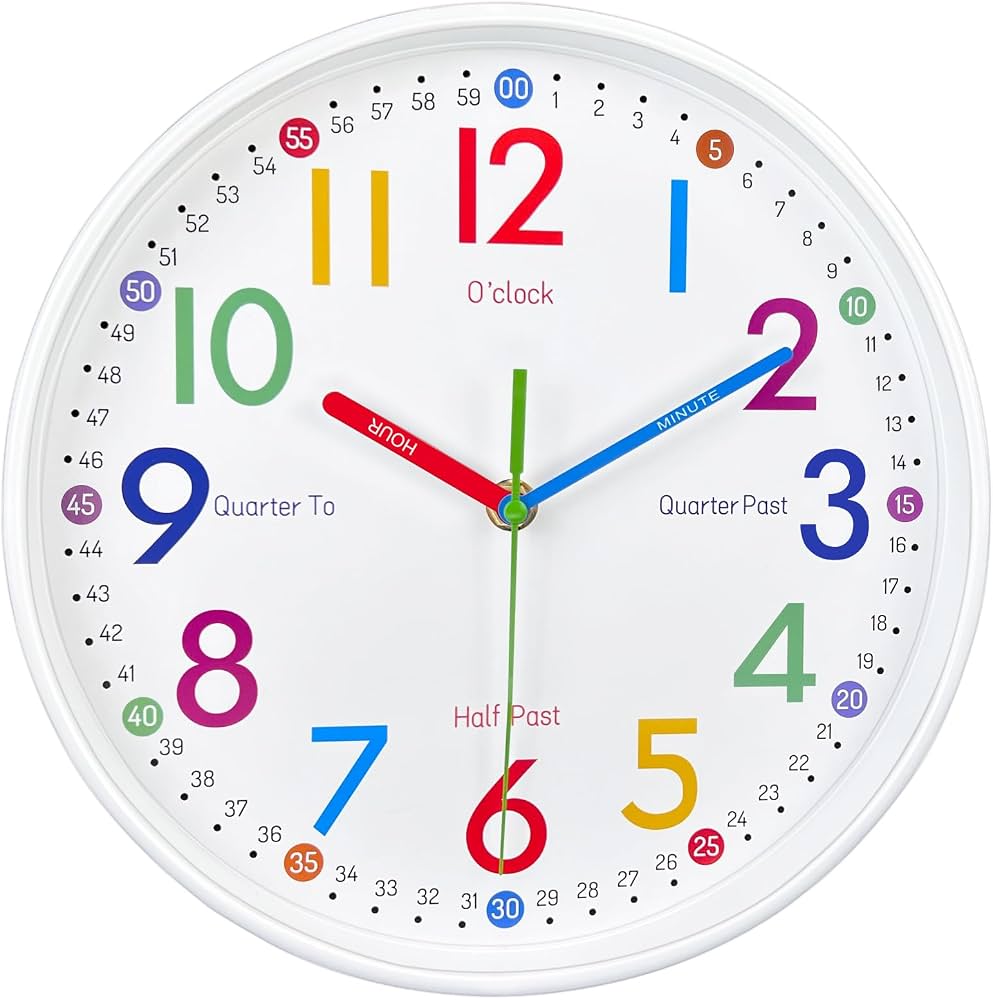
Use analog clocks or visual timers. A visual timer, where a red or colored segment disappears, helps children “see” time passing—something digital numbers can’t provide. Keeping analog clocks visible helps make the passage of time more concrete.
2. Use Event-Based References
Younger (and even older) kids may connect better to events than to minutes. “After this song,” or “when we finish this chapter” provides context they can grasp more easily than “in five minutes.”
3. Practice Estimating and Logging Time
Before starting a recurring task, ask, “How long do you think this will take?” Then track the actual time with a stopwatch. Compare estimates to real results, and log them together (no judgment needed!). This helps build your child’s intuition about time.
4. Break Tasks into Manageable Parts
If a string of directions is overwhelming, break it down: “First, pick up your markers. Next, clear your desk.” For long assignments, use checklists or step-by-step guides.
5. Build In Extra Time for “Firsts”
New things nearly always take longer. Plan for extra time when your child is trying something unfamiliar, like a new type of writing, project, or routine.
6. Use Color-Coded Calendars and Lists
Older kids benefit from visual organization. Try a color-coded family calendar or a checklist with boxes to tick off as each activity is finished.
7. Normalize External Supports
Remind your child (and yourself) that alarms, checklists, and reminders aren’t “cheats”—they’re the same tools adults use. The goal isn’t to get rid of support but to learn when and how to use it.
Frequently Asked Questions About Time Blindness in Kids
Is time blindness a diagnosis?
No. Time blindness is not a clinical diagnosis. It’s a descriptive term for chronic difficulty perceiving, estimating, or tracking time, often noticed among kids with ADHD—but possible in any child.
Do all children struggle with time?
Yes—to varying degrees. An internal sense of time develops slowly throughout childhood. Frequent surprises at transitions or confusion about timing are often developmentally typical.
How is time blindness different from distraction?
Distraction is losing focus on a task. Time blindness is specifically about difficulty tracking or sensing the passage of time—even if your child is focused.
Are timers enough to teach time management?
Timers make time visible, but long-term progress often means combining external supports (like timers) with skill-building activities and honest conversations about what works for your child.
Are these strategies only for children with ADHD?
No. Any child can struggle with time blindness. These supports help all children make time more concrete and manageable.
The Big Picture: Observing Patterns, Supporting Growth
Supporting a child with time blindness isn’t about finding the one perfect tool or never using reminders. It’s about noticing consistent patterns—including successes and struggles—so you can offer support that fits your child’s developmental needs.
Homeschooling gives you a unique window into how your child experiences time—across transitions, learning, play, and daily routines. Trust your observations. Adjust your approach with curiosity and care.
Want to learn more about time perception, executive function, or working memory? Check out our Executive Functioning resources or listen to The OT is IN podcast for more practical tools and thoughtful conversations about supporting your homeschooler.
Each small adjustment is an investment in your child’s growth—supporting skills that will last long after homeschooling ends.
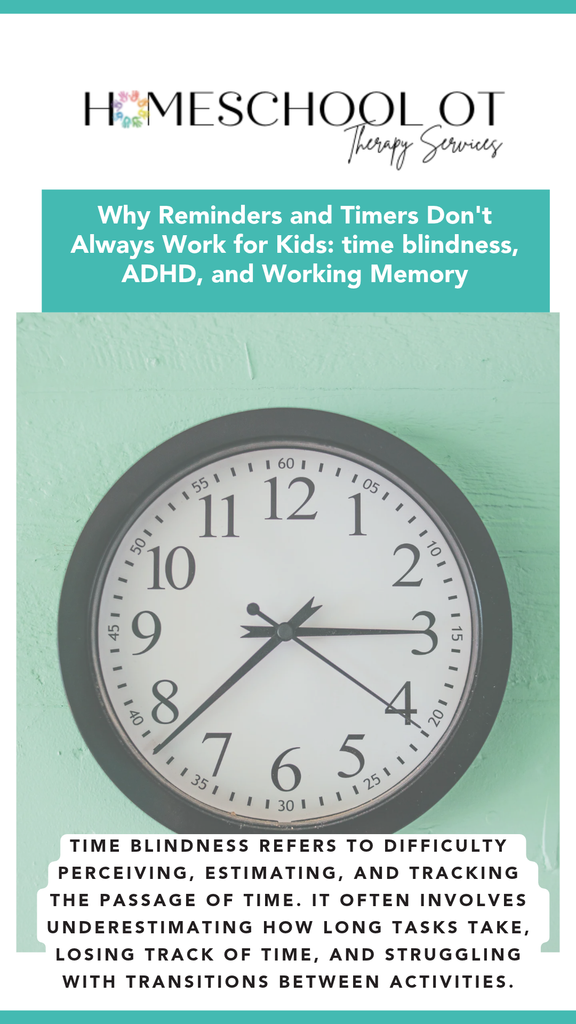
OT is IN #105: Why Reminders and Timers Don’t Always Work for Kids: time blindness, ADHD, and Working Memory
Homeschooling gives us so many opportunities to notice how our kids approach their day. You might see your child get completely absorbed in a favorite project, only to melt down when it’s time to move on. Or maybe a simple direction—“clean your room and come down for dinner”—turns into an hour detour with Legos or missing shoes. Sometimes we chalk it up to motivation, maturity, or even defiance, but what if the real challenge is seeing and managing time itself?
Today, I’m joined by Dr. Amy Moore, a cognitive psychologist and fellow mom who deeply gets both the science and the day-to-day reality of raising neurodivergent learners. As you listen, notice how she weaves together research, personal experience, and practical supports—reminding us that helping kids understand and manage time isn’t about forcing them into someone else’s mold, but about meeting them where they are.
In this episode you’ll hear about:
- What time blindness really means and how it looks in everyday family life
- Why transitions between activities are especially difficult for children with ADHD
- Common reasons timers and visual schedules sometimes don’t work—even after parents have “tried everything”
- The surprising role of working memory, attention, and processing speed in managing time and following directions
- How emotional responses and stress can make time management even harder for neurodivergent kids
- Simple ways to help children build a “felt sense” of time using real-life games and routines
- The benefits of using analog clocks, family calendars, and color-coded schedules at home
- How parents can talk with their child about time struggles without shame or blame
- Why it matters to set realistic expectations about time skills for different ages
- What research says about supporting kids with ADHD without trying to make them “typical”
Research and Resources From Today’s Show
More Executive Functioning Help from HomeschoolOT
If your child struggles with time management, transitions, or following through on everyday tasks, you don’t have to figure it all out on your own. As we explored in this conversation with Dr. Amy Moore, time blindness isn’t simply about watching the clock. Working memory, processing speed, attention, and emotional regulation can all influence how children experience and manage time.
Understanding Executive Functioning and Different Learning Needs
- Episode 11: Exploring Unique Learning Paths in Homeschooling
- Episode 62: Discovering Cognitive Strengths
- Episode 74: Navigating the Teenage Years: Encouragement and Practical Strategies for Thriving Families
Supporting Attention, Regulation, and Everyday Challenges
- Episode 19: Understanding Screentime Effects on Children and Relationships
- Episode 61: Mindful Moments: Supporting Calm and Focus in Children
- Episode 80: Coping Skills: Building Resilience and Awareness in a Busy Home
Creating a Supportive, Neuro-affirming Homeschool Environment
- Episode 17: Neuroaffirming Homeschool Environments
- Episode 66: Shifting from Compliance to Connection: The Power of Declarative Language in Supporting Kids
- Episode 86: Balancing Acceptance and Expectation in Homeschooling
Continue Learning With HomeschoolOT
If this episode helped you better understand why your child may struggle with time management, transitions, or following through on tasks, even when they know what’s expected of them, here are a few ways to keep learning and supporting their executive functioning skills:
- Moving from Knowing to Doing – Explore the gap between understanding what needs to be done and actually putting that knowledge into action.
- Join the OT is IN Insiders for monthly teaching, conversation, and Q&A around topics from the podcast
- Why Should I Seek Occupational Therapy?
- Connect with HomeschoolOT on Instagram
- Explore HomeschoolOT Resources on Teachers Pay Teachers
Thank You to Our Title Sponsor, Lovevery
Thank you to Lovevery for sponsoring this episode of The OT is IN.
As we explored about time blindness and executive functioning, children rely on a combination of skills to navigate everyday activities. Attention, working memory, processing speed, sequencing, and problem-solving all play important roles in how children learn, manage tasks, and develop independence.
And one of the best ways to begin building these foundational skills is through meaningful, hands-on experiences.
That’s one reason Lovevery is such a natural fit for the conversations we have here. Their thoughtfully designed, developmentally appropriate play materials encourage children to explore, problem-solve, practice sequencing, and engage with learning through hands-on activities. These playful experiences create opportunities to strengthen foundational cognitive and developmental skills without making every moment feel like a lesson.
As an occupational therapist, I appreciate resources that recognize play as an important part of childhood development rather than something separate from learning. Learn more about Lovevery here Use the code homeschoolOT10 for 10% off.
Connect With Our Guest, Amy Moore
Dr. Amy Moore is a cognitive psychologist, clinical researcher, board certified Christian counselor, TEDx speaker, host of the Brainy Moms podcast, an ADHD mom, and a mom with ADHD. She is the Director of Psychology & Research for LearningRx in Colorado Springs, CO at the headquarters of the largest network of cognitive training centers in the world. Her ground-breaking neuroplasticity research has been published in peer-reviewed medical and psychology journals and presented at conferences around the country. She has a master’s degree in early childhood education, a PhD in psychology, and 30 years of experience working with children and families. Dr. Amy and her husband Jeff have been married for 27 years and have 3 grown sons.


