
Encouraging Sensory-rich Outdoor Play for All Ages
Exposure to nature and outdoor play provides children with invaluable developmental opportunities, from building fine motor skills to a deeper understanding of their environment. But how do we make this possible for families with children of varying ages and abilities?
This year in our community group, we embraced nature-based activities that anyone could enjoy, regardless of their age, ability, or experience. We attended a weekend gathering with families spread out in a local park in Denver, with a variety of tasks meant to cater to different developmental stages. Children from babies to teenagers, eager to engage in sensory and motor skill-enhancing activities.
Despite the diversity in engagement levels, the benefits were beautifully obvious. Children of all ages and abilities were thriving in an environment that encouraged exploratory play and collaborative learning. Older kids instinctively stepped in to help the younger ones, fostering a sense of community and shared accomplishment.
Here are some structured yet adaptable nature-based activities that we successfully implemented, rated by their level of difficulty for different age groups and abilities (ranging from beginner to advanced):
- Mud Kitchens (Level 1):
- Simple for the youngest explorers. This sensory activity encourages motor skills like scooping and pouring while letting children indulge in creative play.
- Scavenger Hunts (Level 2):
- Ideal for mixed skill levels. Create lists with visual and text cues suited for various reading abilities, inviting kids to find natural items like leaves, sticks, or specific rocks.
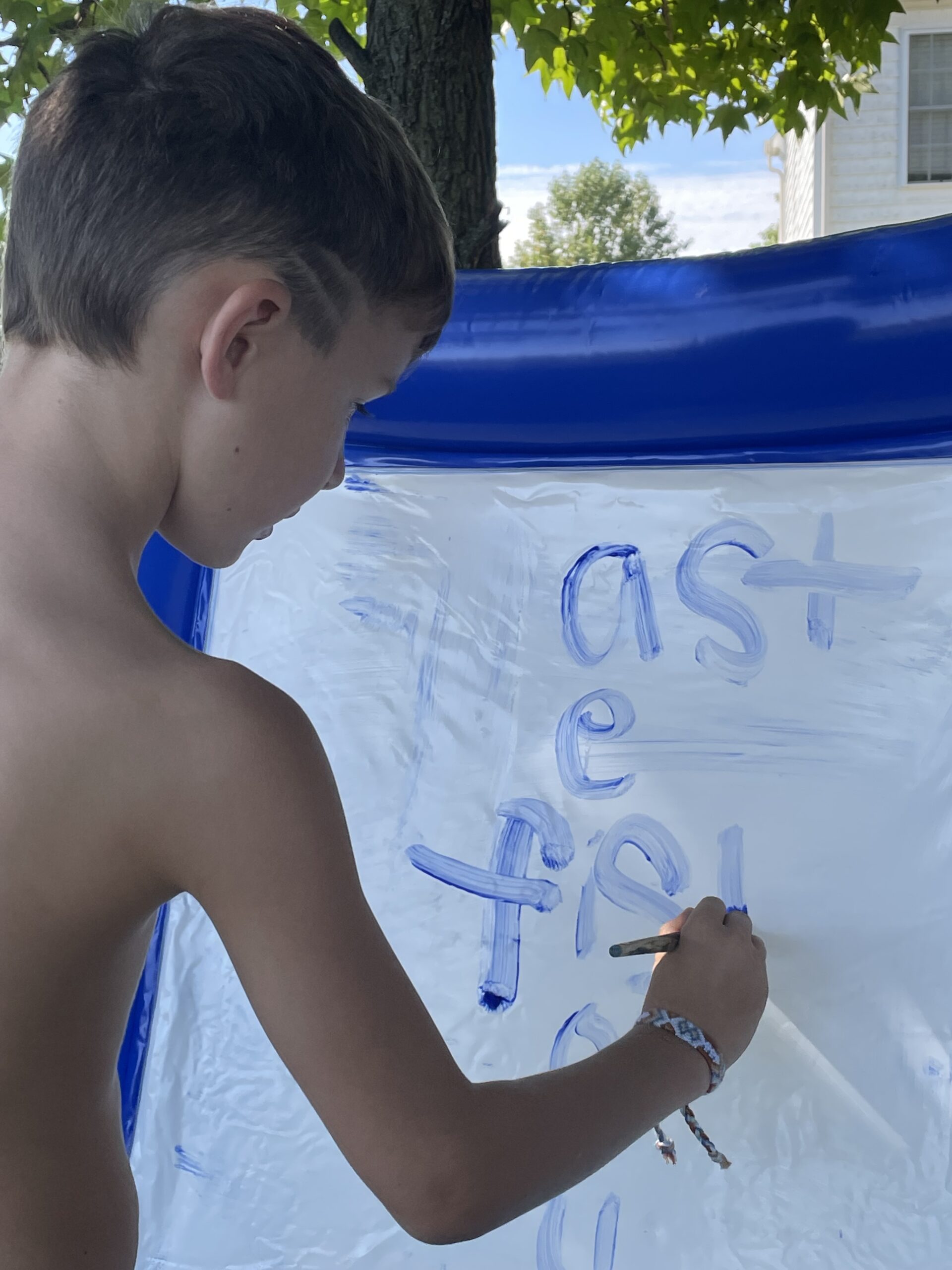
- Outdoor Painting (Level 3):
- Utilizing a blow-up easel, children paint with nature-based materials, which nurtures both creativity and fine motor skills.
- Tongs and Tweezers (Level 4):
- Aimed at honing fine motor skills. Kids use tongs to pick up small objects found in nature like pebbles, acorns, or flowers.
- Vertical Coloring (Level 5):
- Advanced fine motor activity. Set up easels or surfaces for children to color vertically, which enhances shoulder and hand strength crucial for handwriting skills.
- Geocaching and Trail Challenges (Level 6):
- Older children engage in geocaching or navigate obstacle courses. This builds executive functioning skills and motor planning.
- Crafting with Natural Materials (Level 7):
- The most challenging level, where children create art or tools using what they find outdoors. This promotes cooperative play and advanced hand-eye coordination.

Facilitating an inclusive environment means balancing structured activities with the freedom for kids to explore at their own pace, ensuring that the outdoors become a part of their learning and growth. A welcoming attitude and a little adaptability make it possible for every child to benefit from the bounties of nature, irrespective of their starting point.
So parents, take a deep breath and step outside. Let your child’s natural curiosity guide the way, whether you’re in the heart of the city or a sprawling country park. Remember, it’s not about the perfect activity but the enriching experience of connecting with nature together.
Let nature be your classroom, and watch your children flourish.

OT is IN #39 Outdoor Adventures: Developing Fine Motor Skills Through Nature-Based Therapy with Carmela Trejo
In this episode, we’ll delve into the unique ways nature can enhance fine motor skills, core strength, and overall development in children. I will share my experiences with outdoor creative play using blow-up easels, while our guest, Carmela Trejo provides invaluable insights on respecting nature during therapy sessions and the importance of accessible, inclusive outdoor spaces.
We’ll also discuss practical tips for parents to encourage safe and exploratory outdoor play, even in urban environments. Whether it’s homeschooling integration, developing motor skills through fun activities, or fostering a child’s natural curiosity, this episode is packed with advice and heartfelt stories. So, if you’re keen on discovering how nature can be a powerful tool in occupational therapy, tune in and let’s explore together!
In this episode you’ll hear about:
- Encouragement of creative play with paint and mud.
- Importance of respecting nature and property rules.
- Choosing accessible and non-restrictive outdoor locations.
- Teaching children the “rules of nature” like respecting ecosystems.
- Encouraging exploration and safety rather than using “be careful.”
- Fostering motor planning skills through outdoor activities.
- Role of exploratory questions in child development.
- The Denver Science Museum’s new 30-acre play area.
- Accessibility of free parks and trails in Colorado.
- Efforts to improve inclusiveness in outdoor spaces.
- Inclusive park event in Colorado Springs and creation of adaptive equipment.
- Limited school recess time necessitating outdoor play on weekends or after school.
- Role of engaging environments (e.g., inclusive playgrounds) in fostering activity participation.
- Emphasis on preliminary skills like hand strength before handwriting.
- Suggested activities: tracing objects, scavenger hunts, memory exercises, using tongs.
- Vertical coloring and coloring under a table to enhance shoulder and hand strength.
- Concerns from parents about children’s fine motor skills.
- Explanation of in-hand manipulation.
- Nature-based activities for developing fine motor skills.
- Importance of core strength alongside fine motor skills.
- Use of natural obstacles and equipment for gross motor skills.
- Importance of respecting the environment when incorporating man-made items.
- Carmela Trejo’s interest in homeschooling due to dissatisfaction with traditional schooling.
- Nature enrichment programs for homeschooling.
- Advice on engaging families living in urban environments with nature-based activities.
- Differentiation between nature-based therapy and simple outdoor play.
- Mix of structured activities and unstructured, child-led exploration.
- Importance of child-led therapy and natural curiosity guiding sessions.
- Structured and open-ended play targeting development goals like fine motor skills, sensory integration, social abilities, and executive functioning.
Links and Resources From Today’s Show
- Why Should I Seek Occupational Therapy?
- Handwriting Focus Group from Homeschool OT
- Nurturing Creativity: Building Fine Motor Skills Using Handicrafts Guide from Homeschool OT
- In-Hand Manipulation Assessment Activities Video from Homeschool OT
- How do I work on handwriting outdoors? from Treeline Enrichment
- Improving Handwriting without Actually Writing from Homeschool OT
- the Skills Nature Builds from Homeschool OT
- Follow Carmella on Instagram
- Inflatable Easel we mentioned
- Episode 6- Harnessing the Great outdoors for visual development and learning
- Episode 14- Outdoor Activities to Develop Interoception in Children with Guest Caroline Santangelo
- Episode 22- Supporting Children Through Play-Based Reflex Integration
- Episode 28- Risky Play: Understanding the Benefits and Strategies for Safe Child Development
Connect with our Guest, Carmella Trejo MS, OTR/L
Nature is all around us and yet it is one of the most underused environments in educational and therapy settings. We were born to be in nature, explore our surroundings and connect with the earth. This is why I find nature based occupational therapy to be so successful, especially while working with children. Children are often pushed into settings where they cannot explore their natural surroundings. In many occasions they even feel like they can’t be themselves because of such strict boundaries set on them, I’m specifically thinking the traditional school setting here.
I have my Masters in Occupational Therapy from the University of Minnesota. I have worked for an ABA clinic, School Districts and within Home Health. I have had my nature based practice for 2 years and look forward to helping as many children as I can.


