Dysgraphia in Children: A homeschool parent guide
Some children have wonderful ideas and eagerly share what they know in conversation. Then, when they are asked to put those same ideas on paper, everything changes.
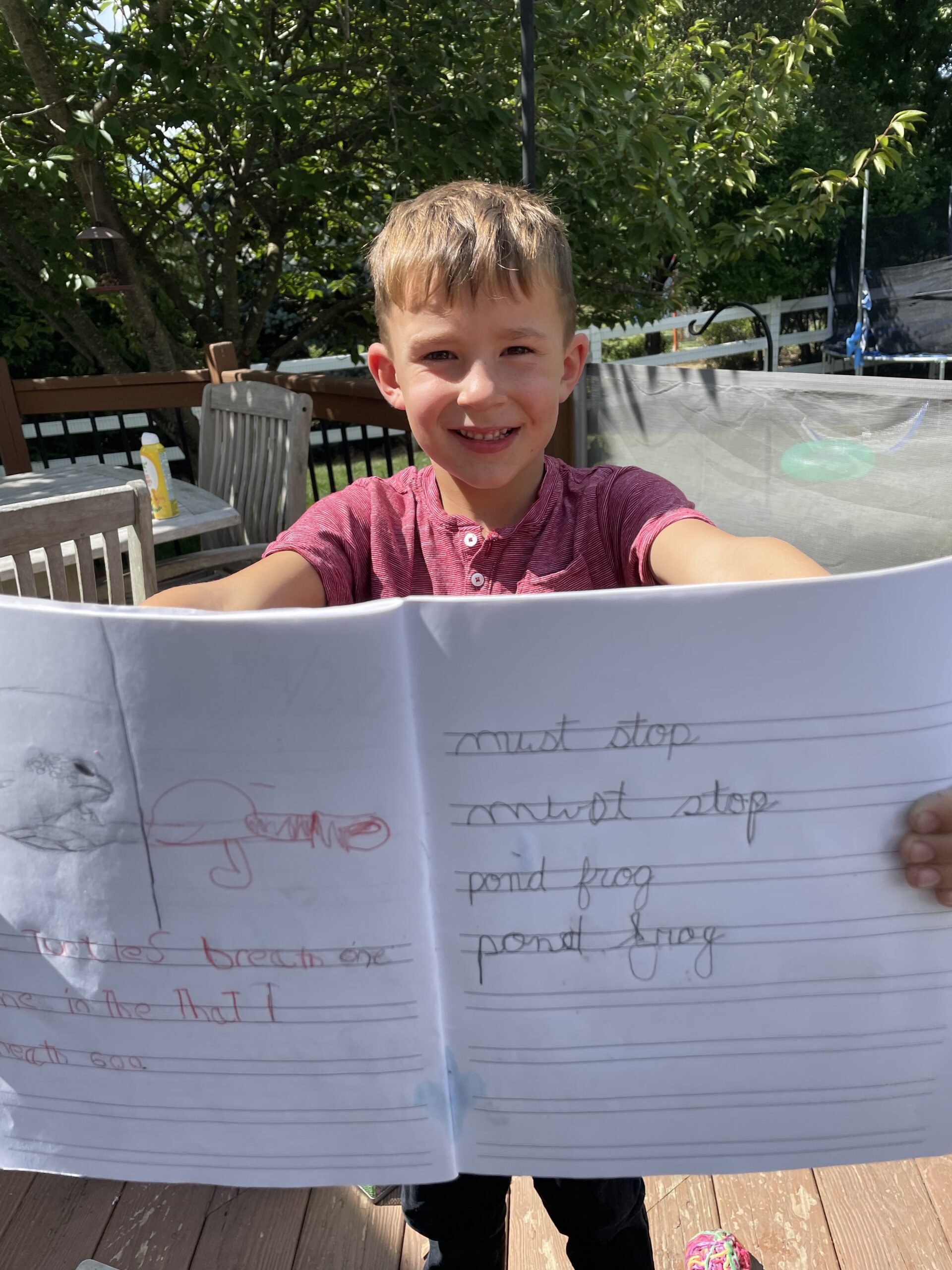
Writing may become slow, tiring, difficult to read, or emotionally overwhelming. A child may forget what they wanted to say while concentrating on forming letters. Another child may write legibly when copying but struggle to create an original sentence.
When this pattern continues despite instruction and practice, parents may begin wondering about dysgraphia.
Understanding dysgraphia in children can help homeschool parents move beyond assumptions about effort or motivation. It gives us a better starting point for observing the writing process, choosing support, and deciding when to build a larger team.
What is Dysgraphia?
Dysgraphia is a term used to describe persistent difficulty with writing. However, it does not look exactly the same in every child.
For some children, the primary difficulty involves the physical process of handwriting. Letter formation, spacing, sizing, pencil control, and writing speed may require significant effort.
Other children have difficulty with spelling, remembering letter patterns, organizing ideas, or translating language into written form. Some experience challenges in several areas at once.
The terminology can become confusing because handwriting, transcription, spelling, and written expression are related but distinct skills. Dysgraphia is also not diagnosed simply because a child has messy handwriting.
What matters most for parents is recognizing that writing is a complex occupation. Understanding dysgraphia in children can help parents look beyond the finished page and notice where the writing process becomes difficult.
Possible Signs of Dysgraphia in children
A child with writing difficulties may:
- write very slowly or laboriously
- become tired or uncomfortable during short assignments
- form letters inconsistently
- use unusual spacing or sizing
- struggle to keep writing organized on the page
- have difficulty remembering how letters are formed
- frequently erase or restartavoid drawing or writing activities
- produce much less in writing than they can explain verbally
- lose ideas while concentrating on handwriting
- struggle to copy accurately
- become frustrated or anxious when writing is required
One sign alone does not establish that a child has dysgraphia. We are looking for patterns that persist over time and interfere with the child’s ability to participate in learning or communicate effectively.
Why isn’t Writing Automatic?
As handwriting develops, children gradually use less conscious effort to form familiar letters and words.
This growing automaticity matters because children have a limited amount of attention and working memory available during a task. If most of that capacity is being used to remember how to form letters, little may remain for spelling, punctuation, idea generation, or organization.
This helps explain why a child might:
- tell you a detailed story but write only one sentence
- spell a word correctly out loud but misspell it while writing
- copy successfully but become stuck when asked to create
- begin with legible handwriting that deteriorates as the task continues
- appear to forget information they demonstrated moments earlier
The child may understand the academic material. The act of recording that knowledge may be creating the barrier.
Understanding Different Barriers
Cheri uses a layered framework to help families consider where writing may be breaking down.
At one level, a child may struggle with the brain-body foundations of writing. These can include motor control, visual-spatial processing, memory, and retrieving letter patterns.
At another level, the difficulty may involve spelling, creating words, or forming sentences.
As writing demands increase, children must also organize information, connect ideas, and develop paragraphs. Executive functioning and language place additional demands on the writing process.
These layers interact. A child may experience difficulty in more than one area.
As both an occupational therapist and the mother of a child with dysgraphia, I have learned that understanding the barrier changes the conversation. Instead of asking why a child will not write more, we can begin asking what is making the writing task difficult.
For a broader introduction to the systems involved, read Why Is Handwriting Hard for My Child?.
Practical Ways to Support Dysgraphia in Your Homeschool
- Observe before choosing a strategy– Begin with one meaningful writing activity. Notice where your child gets stuck, how long the task remains manageable, and what seems to help. Choose one barrier to address instead of correcting every part of the writing at once.
- Identify the learning goal -Ask what your child is supposed to learn or demonstrate. If the goal is knowledge of science, history, or literature, your child might respond verbally, type, use speech-to-text, draw and label a diagram, or complete a graphic organizer. Handwriting can be practiced separately.
- Provide direct instruction – Accommodations improve access, but children may still need explicit teaching. Depending on the barrier, this might include letter formation, spacing, spelling, keyboarding, sentence construction, or organizing a paragraph. Model the skill and provide guided practice in manageable amounts.
- Use memory aids– Writing places significant demands on working memory. Alphabet strips, letter-formation guides, word banks, sentence starters, graphic organizers, and assignment checklists can reduce the amount of information a child must remember at once.
- Adjust the task and environment– Consider the amount of writing, time of day, seating, visual clutter, topic, directions, and number of steps involved. A shorter assignment, clearer worksheet, comfortable writing tool, or movement break may make the task more manageable.
- Use technology with purpose– Begin by identifying the goal and the barrier. Recording may help a child capture an idea before it disappears. Speech-to-text can reduce handwriting demands, while a digital organizer may help sequence ideas. After trying a tool, observe whether it improves access, participation, and independence without taking over the thinking.
When to Build a Support Team
Consider seeking additional help when writing difficulties persist despite appropriate instruction, significantly interfere with learning, cause pain or fatigue, or lead to substantial distress.
The right professional depends on the barrier you are observing. Your child’s team might include:
- an occupational therapist
- a speech-language pathologist
- a psychologist or neuropsychologist
- an educational specialist
- a writing or literacy specialist
- a developmental optometrist or other vision professional
An occupational therapist may examine how motor, visual-motor, sensory, environmental, and task-related factors affect participation in writing. Other professionals may evaluate language, learning, attention, or broader written-expression concerns.
Parents do not need to determine the diagnosis or professional pathway alone. Your observations of your child are valuable information to bring to the team.
Building Confidence
One of the standout pieces of advice Cheri shares is that many parents already have the tools and methods they need; they simply lack the confidence. It’s a comforting reminder that our instincts and existing strategies often align well with best practices in addressing dysgraphia. By continuing to seek help when necessary and trusting our approach, we can provide the best support for our children’s writing journey.
Want Help Putting the Pieces Together?
Understanding dysgraphia is one part of understanding your child’s writing experience.
Making Sense of the Handwriting Puzzle is a self-paced course created for homeschool parents by an occupational therapist and homeschool mom. It helps you observe the whole child, recognize possible barriers, and choose practical support without trying to address every piece at once.
Inside the course, you will explore:
- the interacting systems involved in handwriting
- dysgraphia and different patterns of writing difficulty
- practical strategies, curricula, and tools
- accommodations and alternative ways to demonstrate learning
- low-tech and high-tech assistive technology
- AI as a writing scaffold
- a lasting framework for choosing technology with purpose
Learn More About Making Sense of the Handwriting Puzzle

OT is IN #55 Understanding Dysgraphia: Tools and Strategies for Homeschoolers
n this episode of The OT is IN, I’m joined by Cheri Dotterer, occupational therapist, dysgraphia consultant, author, and host of The Writing Glitch Podcast.
Cheri shares how her own child’s struggles led her to study the connections among handwriting, spelling, memory, motor skills, and written expression. We discuss why dysgraphia is more complex than messy handwriting and how parents can identify the level at which writing becomes difficult.
We also explore flow states, explicit instruction, handwriting and technology, and practical tools that can support children without overlooking their ideas or abilities.
In This Episode, You’ll Hear About:
- Cheri’s personal and professional journey into dysgraphia education
- the meaning of dysgraphia
- why messy handwriting is only one possible sign
- the relationship among handwriting, spelling, memory, and written expression
- why writing may not become automatic
- Cheri’s layered framework for understanding writing difficulties
- motor, visual-spatial, language, and cognitive barriers
- flow states and writing
- explicit instruction versus expecting writing to develop automatically
- memory aids and visual references
- separating handwriting practice from academic learning
- balancing handwriting and technology
- using recording and speech-to-text tools
- building parent confidence
Links and Resources from This Episode
- Making Sense of the Handwriting Puzzle
- Dysgraphia Checklist
- Handwriting Brain-Body DisConnect Course
- Handwriting Brain-Body DisConnect Paperback
- AlphaTriangle
- Brain-Body DisConnect Discussion Guide
- Narration: A Path to Thoughtful Learning
- Episode 24: Why Is Handwriting Hard for My Child?
- Episode 8: Vision and Handwriting
- Episode 37: Fine Motor Skills and Writing
- The Writing Glitch Podcast
- Dotterer Educational Consulting
- Connect with Cheri on LinkedIn
- Connect with Sarah on Instagram
Connect with Cheri Dotterer
Cheri Dotterer is an occupational therapist, dysgraphia consultant, author of Handwriting Brain-Body DisConnect, and host of The Writing Glitch Podcast. Her work helps parents and educators understand the motor, cognitive, language, and neurological demands involved in writing.
Cheri’s professional work grew from her experience supporting her own child through spelling and writing challenges. She now provides education, resources, and practical frameworks that help families and professionals look beyond the finished page and consider the barriers affecting written communication.
Connect with Cheri through Dotterer Educational Consulting and follow her on Instagram.