
Building Independence in Homeschool Planning
Homeschooling is not just about academics—it’s also about growing children who are both capable and independent. But how do we nurture planning skills and self-management in our kids, especially when each child is so unique?
There isn’t a quick fix to make this happen. But, there are some practical tips that we talk about on the OT is IN podcast. Pam Barnhill, a seasoned homeschool parent and this week’s guest, was uplifting and practical, especially for parents seeking more independence for their children while still supplying support and guidance.
Homeschool Independence: Not a Light Switch
Pam shares an important reminder: independence isn’t a light switch that suddenly flips on. Most children won’t wake up one day magically knowing how to organize their work or plan their days. Instead, as parents, we have to think of independence as a muscle—something built up over time, with slow, intentional practice. Just as we wouldn’t expect to run a marathon without training, we can’t expect our kids to manage their schoolwork all at once. Start small: give ownership of a single task, then, as confidence grows, layer on new responsibilities. This mirrors what occupational therapists call the “just right challenge”—meeting our kids where they are and gently stretching them forward.
Practical Approaches for Real Families
From an OT lens, planning isn’t just about tools — it’s about executive functioning, the set of skills that help children initiate tasks, manage time, shift between steps, and follow a plan. And just like sensory processing, these skills vary widely from child to child.
Some kids thrive with simple checklists — like the “spiral notebook” method Pam uses, where each day’s tasks are written in a single, predictable list. Others need everything visible on the wall so they can orient themselves before beginning. In Pam’s home, one child could confidently manage a weekly list, while another needed daily assignments prepped in folders.
This isn’t a parenting mistake — it’s an executive functioning truth:
The system that works for one child may not work for the next. And that’s absolutely OK.
When Executive Functioning Creates Friction
When visual overwhelm, procrastination, or “I don’t know where to start” moments creep in, those are EF signals. They’re not defiance or laziness — they’re the brain saying, “I need a different kind of support.”
Here are some simple OT-informed tools Pam uses that naturally strengthen EF skills while keeping learning doable:
1. Estimating Time
(Time Management + Metacognition)
Sit with your child and guess how long each task might take. Then, after completing it, compare the estimate with reality. This builds internal awareness — a core EF skill — and helps children plan future tasks more confidently.
Over time, kids begin to internalize: “Oh, math usually takes me 15 minutes, not an hour like it feels in my head.”
2. Using Timers
(Sustained Attention + Task Initiation)
Timers create structure the brain can trust. Choose a short, focused work period — maybe 10, 15, or 20 minutes — with the clear promise:
When the timer ends, you’re done.
This helps resistant or anxious learners experience success with “just getting started,” which is often the hardest EF hurdle.
3. Chunking Tasks
(Planning + Organization)
Large worksheets or multi-step assignments can feel insurmountable to a child whose EF skills are still developing. Break them into smaller pieces:
- Cover part of a worksheet
- Fold or cut pages into sections
- Turn tasks into a scavenger hunt or a series of mini-missions
Chunking decreases the cognitive load and helps the child experience momentum — a powerful motivator for executive functioning.
Honoring Different Planning Styles
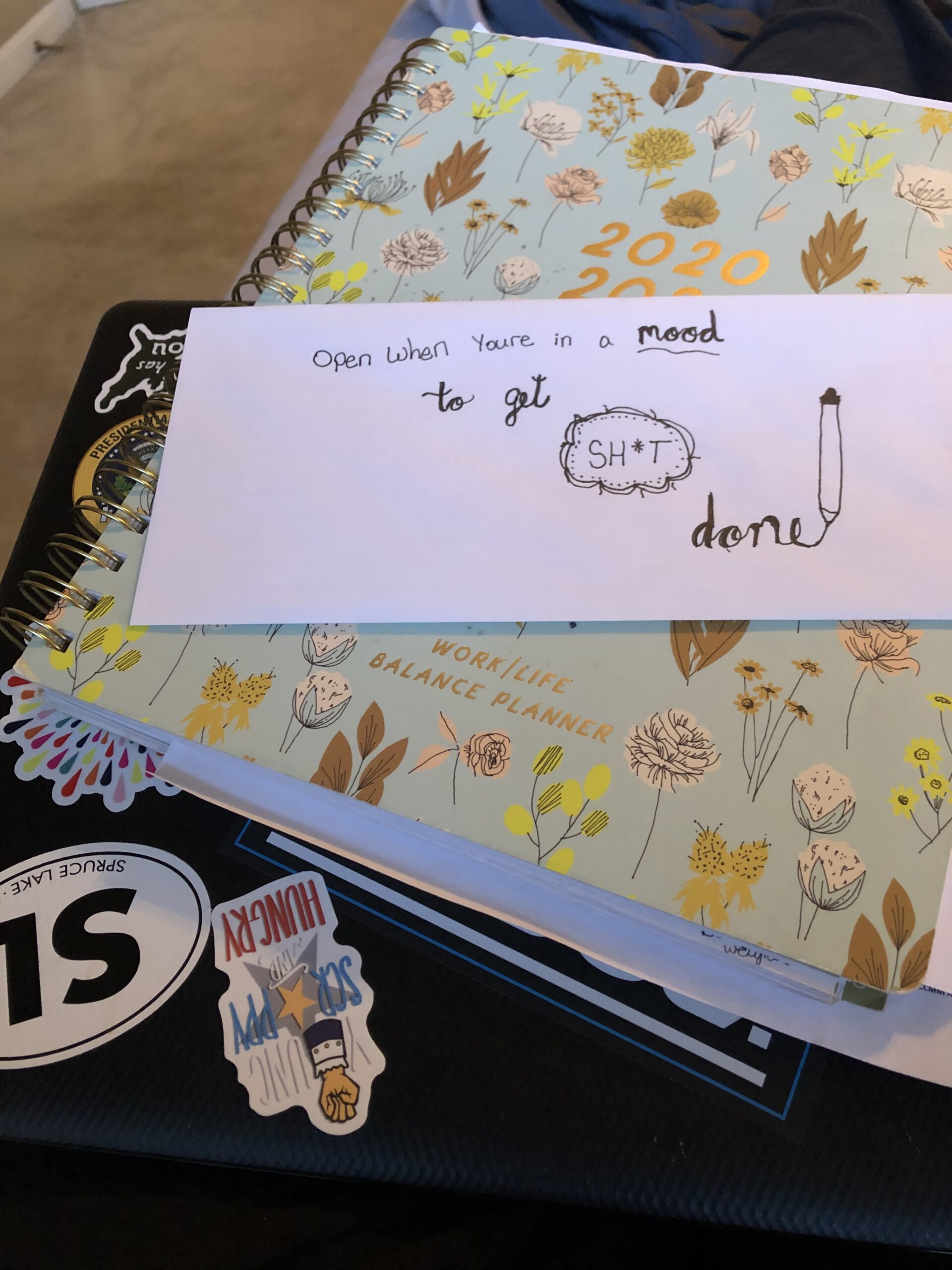
One of the key insights is that planning and organizing don’t look the same for everyone. Just like some people need to see all their belongings to feel organized, some kids need to see all their schoolwork or mark things off on a visible wall chart, not in a closed planner. Our job is to observe and help tailor systems that work for them—sometimes even before our kids realize what those are for themselves! It’s worth remembering: systems that work now might need to adapt as your child’s needs or interests grow. Trying a new checklist, planner, or organizational approach isn’t a failure—it’s normal, and sometimes even fun.
You’re Learning Too
The beauty of homeschooling is that, as parents, we’re learners too. The process of figuring out what works (and what doesn’t) with each child is an education in itself. As Pam says, “homeschooling is how I redeemed my education.” We get to model flexibility, resilience, and a love of learning for our kids.

OT is IN #85: From Checklists to Flexibility: Helping Kids Plan Their Day
I sat down with Pam Barnhill—longtime homeschooler, former classroom teacher, and podcasting inspiration—for an insightful conversation about fostering independence and planning skills in homeschooled kids. Pam shares her own homeschooling journey, from her early days teaching preschool at home to launching her teens into work studies and career paths. Together we discuss the ups and downs of raising independent learners, offering practical tips for developing planning muscles, navigating different organizational styles, and supporting kids with unique needs, like dyslexia. Whether you’re new to homeschooling or a seasoned pro, this episode is packed with relatable stories, honest reflections, and actionable ideas to help your family thrive.
In this episode you’ll hear about:
- Pam introduces herself, mentioning her background as a former classroom teacher and her journey as a homeschool mom.
- Discussion about learning alongside children and how homeschooling has been enriching for both parents and kids.
- Learning Through Homeschooling
- Pam’s experience homeschooling her children from preschool through high school.
- The concept of “redeeming” one’s own education as a homeschooling parent.
- Developing Independence and Planning Skills
- The importance of teaching kids independence in setting up and organizing their school day.
- The idea that independence is a muscle that needs gradual strengthening, not a switch.
- Tools and Techniques for Planning
- Using checklists and “Sarah McKenzie’s spiral notebook” for tracking daily tasks, even before children can read.
- Benefits of lists/checklists in reducing decision fatigue for both kids and parents.
- Transition to weekly lists as kids mature, allowing more flexibility in how kids schedule their work.
- Adjusting planning approaches for each child based on their preferences and capabilities.
- Time Management and Overcoming Overwhelm
- Teaching children to estimate how long tasks will take and tracking actual times.
- Dealing with “this will take forever” feelings and procrastination.
- Using timers (e.g., 20-minute work blocks) to encourage focus and reduce overwhelm.
- The myth of “one right way” for planning and organization; acknowledging various effective approaches.
Links and Resources From Today’s Show
- Why Should I Seek Occupational Therapy?
- Connect with Sarah Collins on IG
- The Homeschool OT Teachers Pay Teachers
- Executive Functioning For Teens Course
- Social Skills & Executive Functioning
- Homeschool Daily Setup: Parental Planning Guide
- Pam Barnhill’s Website
- Episode 10: Streamlining Your Space: Organizing for Better Executive Functioning
- Episode 11: Exploring Unique Learning Paths in Homeschooling with Guest Amy Bodkin
- Episode 12: Executive Functioning in Homeschooling: A Teenager’s Experience with Organization and Planning
- Episode 42: Executive Functioning Skills for Families: Holiday Edition
- Episode 67: Setting Up A Homeschool Day
Connect With Our Guest, Pam Barnhill
Pam Barnhill believes that you don’t have to sacrifice relationships to homeschool strong. An award-winning educator, former journalist, and now homeschooling mom, she has a knack for breaking down big tasks into small, manageable steps and getting to the heart of the stories her listeners want to hear.
She is the host of the popular podcast Homeschool Better Together and the author of three homeschooling books, including: Better Together: Strengthen Your Family, Simplify Your Homeschool, and Savor the Subjects that Matter Most and Plan Your Year: Homeschool Planning for Purpose and Peace. Pam lives in the Deep South with her husband of thirty-one years, three (mostly) awesome kids, and the dog dynamic duo. You can find her online at pambarnhill.com.


