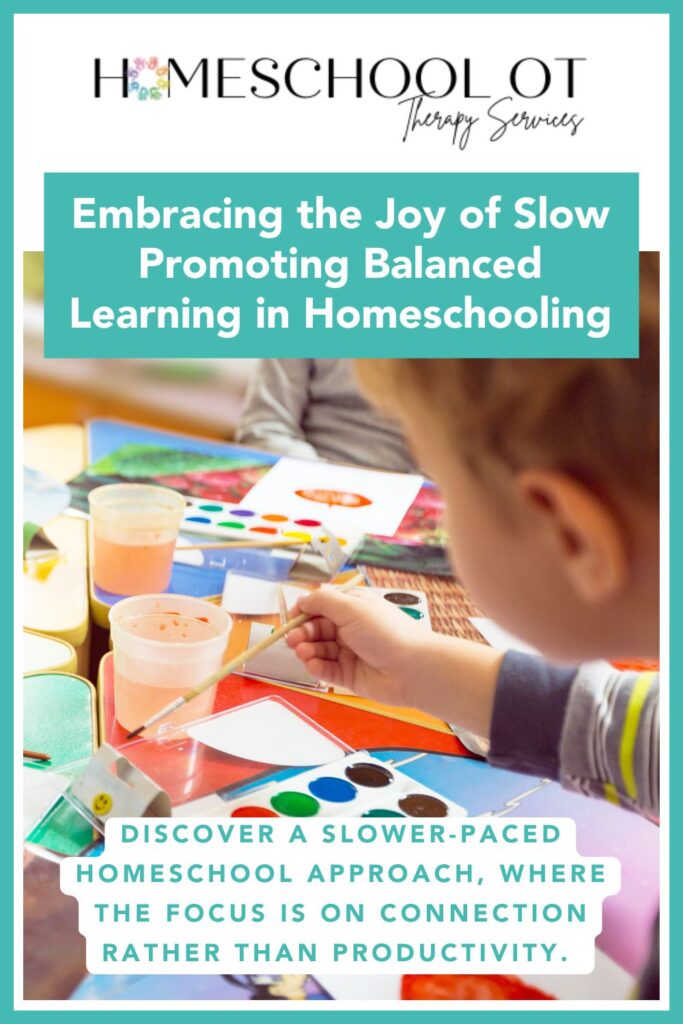
Embracing the Joy of Slow: Promoting Balanced Learning in Homeschooling
Finding balance in the whirlwind of homeschooling can feel like an insurmountable challenge, especially for parents juggling multiple children with varying abilities and needs. Leslie Martino, a seasoned homeschooling mom of four and author of “The Joy of Slow,” brings a refreshing perspective that makes the homeschool journey not only manageable but profoundly fulfilling.
Leslie’s philosophy revolves around a slower-paced educational approach, where the focus is on depth rather than breadth and connection rather than productivity. Let’s take a look at some key insights from our recent conversation.
Time as Expansive Rather Than Pressured
Leslie shared a transformative approach to viewing time—seeing it as expansive rather than something we are constantly pressing for. This might sound like an airy concept, especially with a household full of eager (and sometimes restless) learners, but it’s deeply practical.
Instead of packing your schedule with countless activities, consider adding intentional spaces for rest, reflection, creativity, and spontaneous discovery. When time is viewed as expansive, children are given the room to explore at their own pace and to deeply engage in what fascinates them.
Rather than rushing through a history lesson, pause and let your child illustrate their favorite story or act it out in a backyard play. As Leslie points out, real learning happens when there’s time to think, notice, try, fail, and try again.
Prioritizing Meaningful Learning Over Rigor
A crucial takeaway from Leslie’s book, Joy of Slow: Restoring Balance and Wonder to Homeschool Learning, is differentiating between rigor and meaningful preparation. Rigor, often equated with difficulty and discipline, isn’t always the best goal for an education environment. Instead, the emphasis should be on preparing children for the challenges they will face, fostering resilience through engaging and meaningful tasks.
Consider your homeschool day: Are your children merely ticking off boxes, or are they genuinely engaging with the material and learning to persevere through challenges? By prioritizing meaningful learning, you teach your children to approach difficulties with a growth mindset, equipping them with critical thinking skills and the ability to adapt and innovate.

Fostering Reflective Thinking through Conversations
Metacognition, or thinking about thinking, is an invaluable skill that Leslie advocates nurturing through everyday conversations. Simple yet profound questions like, “How did you figure that out?” or “What’s your plan for this project?” encourage children to reflect on their processes and recognize their strengths and areas for improvement.
Even with young children, these conversations can be enlightening. A five-year-old explaining their drawing not only helps you understand their thought process but also builds their confidence and articulation skills. With older children, this reflection can be more structured, involving self-assessments or journaling about their learning experiences.
Integrating Playfulness and Joy
Leslie explains how initiating fun and finding opportunities for play can transform the homeschooling experience. Playfulness reduces pressure and opens up honest, accepting interactions between parents and children. This environment, free from the constant stress of productivity, fosters creativity and a love for learning.
In your homeschooling routine, allow for moments of spontaneity—silly dances between lessons, impromptu nature walks, or storytelling sessions. These joyful breaks not only rejuvenate minds but also build stronger relationships and a positive association with the learning process.
Encouragement for Homeschooling Parents
As you navigate the complexities of homeschooling, remember to take it slow, focus on meaningful engagement, and cherish the journey. Learning is not a race but a deeply personal and iterative process that thrives on patience, reflection, and joy.
Keep in mind the holistic development of your children and create a balanced educational experience that nurtures their mind, body, and spirit. Leslie Martino’s insights remind us, that less can indeed be more, and slow can be exceptionally beautiful. Embrace this philosophy, and you’ll find both you and your children growing in a rich, expansive space of learning.
OT is IN #44 Prioritizing Slow in Homeschooling: A chat with Leslie Martino
Today, we are thrilled to have the incredible Leslie Martino, join us. She is a homeschooling mom, educator, and author of the inspiring book “The Joy of Slow.” Join our conversation about the importance of slowing down in learning, finding balance, and igniting a love for education. Leslie shares invaluable insights about turning challenges into meaningful learning experiences, fostering resilience, and embracing expansive time. Whether you’re a seasoned homeschooler or new to the journey, this episode is packed with wisdom and practical tips that will enrich your educational approach.
In this episode you’ll hear about:
- Discussion on Rigor vs. Preparation
- Differentiating between rigor and preparation
- Parents’ misconception about rigorous learning
- Holistic and meaningful education
- Ideal learning state: relaxed alertness
- Importance of meaningful and engaging learning experiences
- Avoiding mindless productivity
- Integrating leisure and hard work in learning
- Concept of slow learning, going deeper with learning rather than broader
- Addressing learning gaps
- Fear of missing out on opportunities
- The misconception of control in education
- Different aspects of time beyond productivity
- Time for rest, passion, creativity, and reflection
- Taking time for meaningful learning experiences
- Importance of processing and noticing
- Examples outside conventional subjects
- Metacognition: Learning how you learn
- Strategies for integrating reflection including conversations with children or writing reflections
- Value of child’s self-assessment in their learning process
- Recap of the importance of expansive and reflective learning
- Noticing and embracing the child’s perspective in education
Links and Resources From Today’s Show
- Why Should I Seek Occupational Therapy?
- Tips to Improve Prioritization – The OT Toolbox
- What is Executive Function? Course from Homeschool OT
- Exploring the Occupation of Rest – Research Paper
- Different Kinds of Rest – Chronic Resilience OT
- Episode 9- The Impact of Music on Executive Functioning: A Homeschooling Perspective
- Episode 10- Streamlining Your Space: Organizing for Better Executive Functioning
- Episode 11- Exploring Unique Learning Paths in Homeschooling with Guest Amy Bodkin
- Episode 12- Executive Functioning in Homeschooling: A Teenager’s Experience with Organization and Planning
- The Joy of Slow: Restoring Balance and Wonder to Homeschool Learning
- Follow Leslie Martino on Instagram
Connect with our Guest, Leslie Martino
Leslie M Martino has over twenty years of experience teaching—as an elementary school teacher, a home educator, and an adjunct lecturer for graduate courses focused on the role of the teacher in supporting children’s individual work preferences. She homeschools her four children and works as an educational consultant, writing curricula, training teachers, and coaching parents to approach learning in an interest-based and child-directed way. She is a speaker on topics of education and motherhood and is also a contributing writer for the Wild + Free homeschooling community.