
Helping Our Kids Thrive: Practical Social and Motor Skill Building in Homeschool Life
Homeschooling is bursting with opportunities for our children to learn and grow, but some skills—like social and motor skills—require more intention and creativity to nurture, especially in multi-age, multi-ability households. How do we encourage these important developmental skills when each child is on their own unique journey?
No Perfect Calm, Just Real Growth
Picture your homeschool days. Are they all serene social gatherings, with children talking sweetly in perfect harmony and moving gracefully through their lessons? If so, please invite us over! For the rest of us, the room looks much more like controlled chaos: children of all ages and abilities negotiating play, collaborating on projects, occasionally disagreeing, and constantly trying to keep up, not only with academics but also with each other.
Bella points out that these daily struggles and triumphs are where true development happens. Social skill building isn’t about perfect interactions; it’s about learning flexibility, communication, self-awareness, and how to navigate the world around us—even when things don’t go as planned.

Recognizing Development Even Without a Classroom
It can be tough to gauge our children’s progress when there’s no formal setting for comparison. In Dr. Tate’s work with the STASI Protocol at a pediatric clinic, she noticed that parents and therapists sometimes have vastly different impressions of a child’s abilities. The environment plays a huge part: children might do well at home, but struggle when placed in new, less predictable situations.
How do we know what to look for? According to Dr. Tate, major areas of development to keep an eye on include:
- Executive functioning skills: attention to task, flexibility, problem-solving, and emotional regulation in new settings.
- Communication: expressing needs, interpreting social cues, and managing feelings.
- Motor skills: both gross (large movements like jumping, running) and fine (small movements like holding a pencil or utensil).
Are our kids able to negotiate play with peers? Can they ask for help or manage frustrations? Are they able to adapt their behavior to match the situation—inside, outside, familiar, or brand new?
Practical Wisdom: Meet Them Where They Are
One of the takeaways is that it’s okay for kids to be “in progress.” Development isn’t a race, nor is it perfectly linear. Our children will have strengths, needs, quirks, and their own timelines. As Bella wisely shares, sometimes we need to “meet our children where they’re at”—encouraging progress, but without adding pressure that could lead to frustration or anxiety.
One concrete suggestion Bella gave is to broaden your children’s social experiences organically:
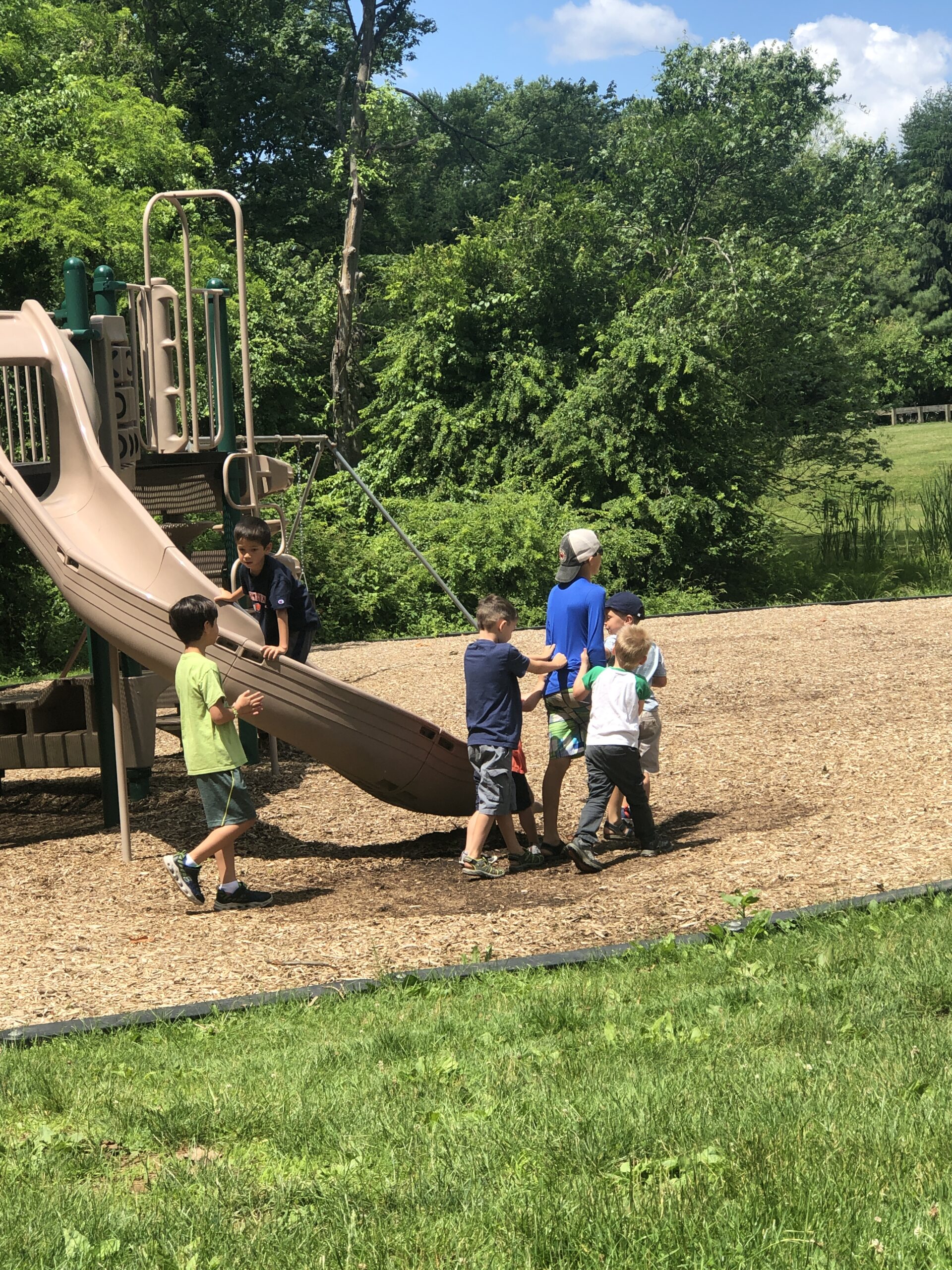
- Visit playgrounds.
- Join mixed-age co-ops or sports.
- Invite neighborhood kids for group activities. These settings encourage kids to practice flexible thinking, communication, and cooperation—skills that are essential not just at school, but in life.
OT is IN #79: How to Spot and Support Social and Executive Functioning Skills in Your Child
This week I’m joined by Dr. Isabella “Bella” Tate, a pediatric occupational therapist and recent doctoral graduate, who shares her journey from New Jersey to Sacramento as a traveling OT. I first met Bella at the AOTA Conference in Philadelphia, where Bella was presenting her doctoral capstone research on the STASI Protocol—a new screening tool designed to assess social skills and developmental needs in youth, especially in group therapy and community settings.
We’ll dive into the essential social, executive functioning, and communication skills that children need to thrive, with a particular focus on the homeschool community. Bella discusses the gaps she observed in existing screening tools, how her protocol helps parents and therapists identify strengths and challenges, and why building a supportive team and meeting children where they are is crucial for growth and participation—wherever learning happens. Whether you’re a fellow OT, homeschool parent, or just curious about child development, this episode is full of practical insights, encouragement, and real-life experiences to support your child’s unique journey.
In this episode you’ll hear about:
- Dr. Tate’s occupational therapy (OT) journey
- Recent graduation with a doctorate from Duquesne University.
- Her first travel OT contract in Sacramento, California.
- Passion for pediatric OT but desire to travel and explore different settings.
- Personal background: originally from New Jersey, journeying cross-country.
- The STASI Protocol Development
- Presentation at AOTA conference: Capstone project titled “STASI Protocol.”
- Initial working title “Sassy,” later changed for appropriateness.
- Rationale for the protocol:
- Bridging the gap between parent-reported intake issues and observational presentation in therapeutic groups.
- Need for a quick, cohesive screening tool (not a full evaluation).
- Key Social Skills for Children (Developmental Focus)
- Social skill requirements for group settings (relevant to homeschoolers)
- Executive functioning as a core social skill component
- Problem-solving, attention to task, and “theory of mind.”
- Reading nonverbal cues and adapting behavior to environment.
- Communication’s pivotal role
- Expressing feelings, needs, and navigating behaviors.
- Overlap and collaboration between OT and speech pathology.
- Executive Functioning and Social Development
- Components of executive functioning discussed
- Task initiation, persistence, flexible thinking, impulsivity/safety.
- Challenges of observing executive function in homeschool settings:
- Parental accommodations mask struggles outside the home.
- Socialization in Homeschooling Contexts
- Differences in socialization between standard schools and homeschools
- Mixed-age interactions, multi-generational influence in co-ops.
- Opportunities to build communication skills across various ages.
- Homeschooling strengths: flexibility, diverse groupings, natural mentorship.
- The Assessment Process & Tools for Parents
- Direct, quick, activity-based screening by the therapist (STASI activities)
Links and Resources From Today’s Show
- Why Should I Seek Occupational Therapy?
- Connect with Sarah Collins on IG
- The Homeschool OT Teachers Pay Teachers
- Executive Functioning For Teens Course
- Social Skills & Executive Functioning
- Dare To Lead By Brené Brown
- Amplify OT
- Child And Adolescent Scale Of Participation
- Developmental Milestones For Productivity
- The Relationship Between Children’s Executive Functioning, Theory Of Mind, And Verbal Skills
- Social And Emotional Learning
- Homeschooled Children’s Social Skills
- Episode 2: Decoding Behavior in homeschooling- sensory overwhelm, emotional control, perseverance
- Episode 15: From Morning to Night: Incorporating Social Emotional Learning in Homeschool
- Episode 17: Neuro Affirming Homeschool Environments with Keisha Berry
- Episode 49: Connection Over Curriculum: Building Strong Bonds in Homeschooling
Connect With Our Guest, Isabella Tate
Dr. Isabella Tate is an occupational therapist. She completed her occupational therapy doctorate (OTD) this past December from Duquesne University in Pittsburgh, PA. She has had a lot of experience working in pediatrics throughout her education and life. Her doctoral capstone addressed screening children for therapeutic groups at an outpatient pediatric site and the way she fell in love with the profession was by growing up watching her mom, who is also a pediatric OT. She feels not only do children have a lot to learn from us, but us from them as well, and looks forward to one day having a permanent job with the bright, young minds. She is working as a travel OT, currently on her first contract in Sacramento, CA at a skilled nursing facility.