
Working Memory in Children: How It Affects Learning and What Helps
Your child understood the math problem yesterday, but today they cannot remember the steps. You give three directions, and they complete the first one before forgetting what comes next. Or they finish reading a page only to realize they cannot tell you what they just read.
These everyday struggles may be connected to working memory.
Working memory in children affects their ability to hold onto information long enough to actually use it. When that mental space becomes overloaded, children may struggle with following directions, completing multi-step math problems, reading comprehension, or finishing tasks, even when they understand the material.
In this episode of The OT Is In Podcast, I talk with cognitive trainer Sandra Zamalis about what working memory is, how working memory challenges can show up during learning, and the difference between supporting a child with accommodations and intentionally building cognitive skills over time.
For homeschool families, understanding working memory can help us look beyond “I just told you that” and begin asking what support a child’s brain may need to learn more effectively.
What Does Working Memory Look Like in Children
Working memory is more than simply remembering information. Sandra Zamalis describes it as the brain’s mental “bucket,” where we temporarily hold information while we use it to complete a task.
Some children naturally have a larger working memory “bucket” than others. A child with a five-gallon bucket may be able to hold and work with more information at once, while a child with a smaller pail may reach capacity much sooner.
You might notice this during everyday learning. A child may:
- understand a math concept but lose track of the steps halfway through a problem
- read a page but struggle to remember what they just read
- begin a task but forget what they were supposed to do next
- follow the first part of a multi-step direction but lose the rest
These challenges can sometimes look like inattention, lack of persistence, or even a child simply not listening. But working memory may be one piece of what is happening. When the amount of information a child needs to hold exceeds their working memory capacity, completing the task becomes much harder.
Understanding that difference can change how we respond. Instead of simply repeating the direction or asking a child to try harder, we can consider ways to reduce the working memory load while also providing opportunities to practice these skills.
How Working Memory Affects Learning
Working memory rarely works alone. When children are learning, their brains may need to remember information, process it quickly, ignore distractions, and use previously learned skills all at the same time.
This is why automaticity matters. When a skill becomes automatic, a child no longer has to devote as much mental effort to it. That leaves more working memory available for the more complex parts of the task.
Think about a multi-step math problem. If a child is still working hard to recall basic math facts while also trying to remember the steps of the problem, their working memory can quickly become overloaded. Working memory and literacy are closely connected, and I explored that relationship in more depth with Tera Sumpter in Episode 83. For example, a child may use so much mental effort working through individual words that it becomes difficult to hold onto enough information to understand the passage as a whole.
Sandra explains that working memory and processing speed are also closely connected. A child may have the capacity to hold information, but if processing that information takes too long, some of it may be lost before the child can use it.
For homeschool parents, recognizing the demands on working memory can help us look at why a task is difficult rather than only focusing on whether our child completed it successfully.
Building Working Memory with the “Just Right Challenge”
If we want to strengthen a skill, simply making an activity harder is not the answer. The challenge needs to match the child.
Sandra describes this as productive struggle. A task needs to be challenging enough that the child has to work at it, but not so difficult that the child becomes overwhelmed. In occupational therapy, we often call this the “just right challenge.”
Sandra explains that cognitive training gradually increases the demands placed on a specific skill. Activities begin at a manageable level and become more complex as the child is ready. Immediate feedback is also important so the child can recognize an error, adjust, and keep going.
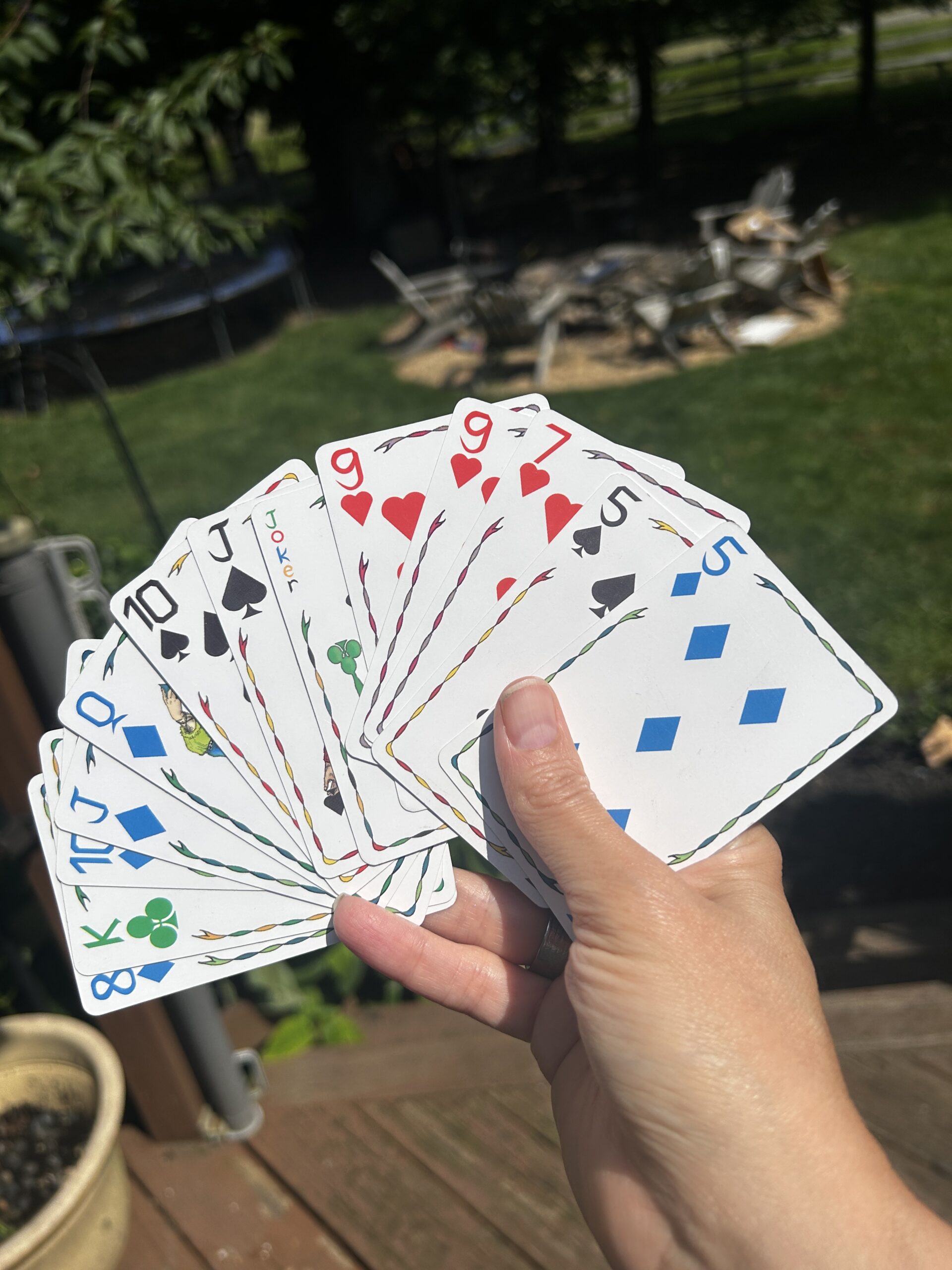
In the episode, Sandra demonstrates this by having me complete a working memory activity with numbers. I have to hold one number in my mind while using new information to complete the next step. Once I understand the task, she explains how it could gradually become more complex to place greater demands on working memory. Games can be one way to practice executive functioning skills without adding another academic task to the homeschool day. If you’re looking for ideas, my Executive Functioning Games List includes games that target skills like working memory, flexibility, planning, and attention.
For homeschool families, there is an important takeaway here: support and challenge do not have to be opposites. We can reduce unnecessary demands when a child is overloaded while still giving them opportunities to practice difficult skills at a level they can manage.
If you want to better understand working memory alongside skills like task initiation, planning, flexibility, and emotional control, I teach these skills together in my Executive Functioning course for homeschool parents.
Listen to Episode 94: Working Memory in Children
In Episode 94 of The OT Is In Podcast, I talk with Sandra Zamalis of LearningRx about working memory in children and how it can affect learning at home. We also talk about the difference between accommodating working memory challenges and intentionally building cognitive skills, and Sandra puts my own working memory to the test with an activity you can try along with us!
In this episode you’ll hear about:
- what working memory is and why children have different working memory capacities
- signs that working memory may be making everyday learning more difficult
- how working memory can affect reading comprehension, math, following directions, and completing multi-step tasks
- the difference between visual and auditory working memoryaccommodations that reduce cognitive load versus approaches designed to build cognitive skills
- automaticity, processing speed, and their relationship to working memory
- productive struggle and finding the “just right challenge”
- a working memory activity you can try while you listen
- why trust and emotional safety matter when children are practicing difficult skills
- questions parents can ask when considering cognitive training
- how to talk with a child who wonders, “Are you trying to fix me?”
Links and Resources From Today’s Show
- Check Out Our Title Sponsor CTC Math
- CTC Math Free Trial
- Executive Function, Regulation, and Getting Started In Your Homeschool
- What Are Executive Functioning Skills?
- Field Trips Can Build Executive Functioning
- Episode 2: Decoding Behavior in homeschooling- sensory overwhelm, emotional control, perseverance
- Episode 43: Collaborative Problem-Solving in Education and Parenting
- Episode 60: Tackling Childhood Anxiety: How Occupational Therapy Can Help
- Episode 66: The Power of Declarative Language in Supporting Kids
- Episode 71: Raising Resilient Learners: When and How to Talk About Diagnoses with Your Kids
Thanks to our sponsor, CTC Math- Math can place significant demands on working memory, especially when children are trying to remember multiple steps while also solving the problem. One benefit of homeschooling is that we can adjust the pace and reduce some of that cognitive load when needed.
That’s one reason I appreciate CTC Math. Children can work through lessons at their own pace, revisit instruction when they need it, and practice skills before moving on to something more complex.
Thank you to CTC Math for sponsoring this episode of The OT Is In Podcast. Get CTC math for 50% off here!
Connect With Our Guest, Sandy Zamalis
Sandy Zamalis is the Executive Director and owner of LearningRx Staunton-Harrisonburg, where her passion is helping struggling learners of all ages discover confidence and success. A former homeschooling mom, Sandy found her calling in cognitive training after witnessing the frustrations of students falling through the cracks. Today, she leads two thriving centers, empowering children and adults alike to overcome learning struggles and build the strong cognitive foundation everyone deserves.




Hello,
I learned of Sarah Collins from the 2026 ICHE Conference. I like that you mention all ages. Especially good news for adults who have slipped through the educational system who were never helped. In regarding poor memory both short and long term how can this be overcome?