
Building Writers with Nature Journaling
Coming up with ideas for writing is often difficult. Heading outside, however, with pencils, journals, and possibly nature guides to observe and listen opens the mind to numerous opportunities to write. “What do you see?” or “What do you hear?” provide ideas that set forth beautiful nature journals for ALL ages and abilities.
Let’s consider how to use nature journaling with children to grow their writing skills.
For children who have difficulties communicating verbally, share your own observations of them as you walk with them. What caused your child to pause, visually track, take a deep breath, or even reach out to touch? When you notice these reactions, share them out loud and write them in the journal.
- “I watched you smile and close your eyes when we stepped out into the sunshine.”
- “Your eyes followed that eagle with its wings spread apart across the sky.”
- “I saw how the cold breeze on your face made you take a deep breath.”
- “That purple flower growing close to the ground caught your attention since you stooped down to touch it.”
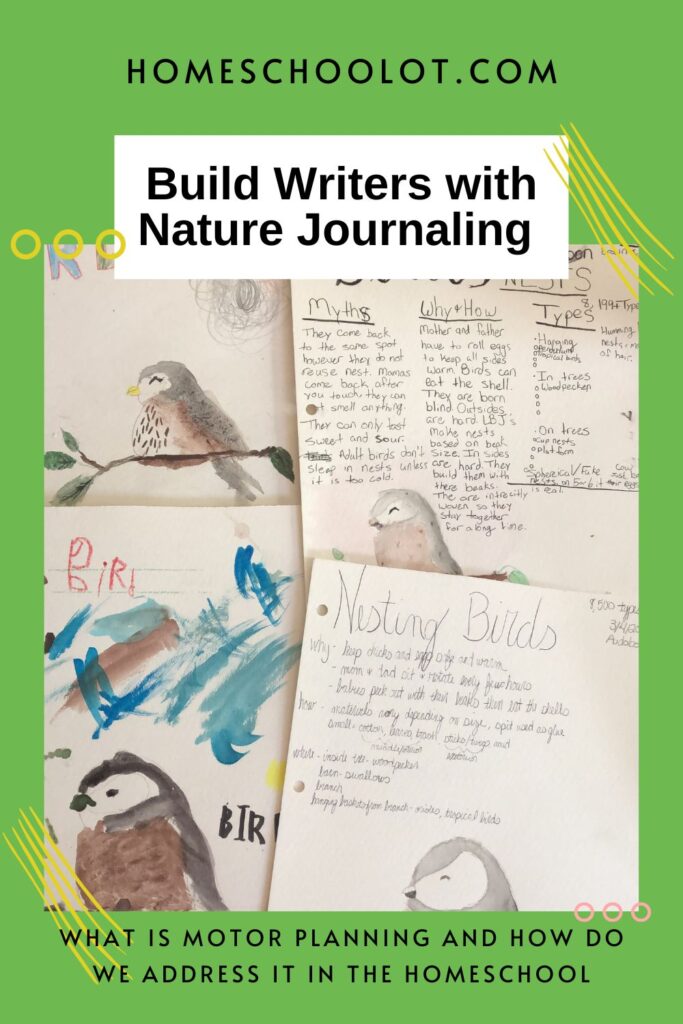
This confirms to the child that he or she is communicating through actions and reactions and that communication corresponds to the written word. The journal entry that day can simply be a date and your own written observations. You could eventually add photos of the walk or of tangible items collected from the walk. Perhaps, add drawings—your child’s or yours that your child colors.
For children who communicate verbally or use augmentative and alternative devices (AAC) but are not yet writing, write their responses exactly as they narrate them. The journal then becomes a beautiful reminder that communication corresponds to the written word. Journal entries can be as simple as “the bird flew.”
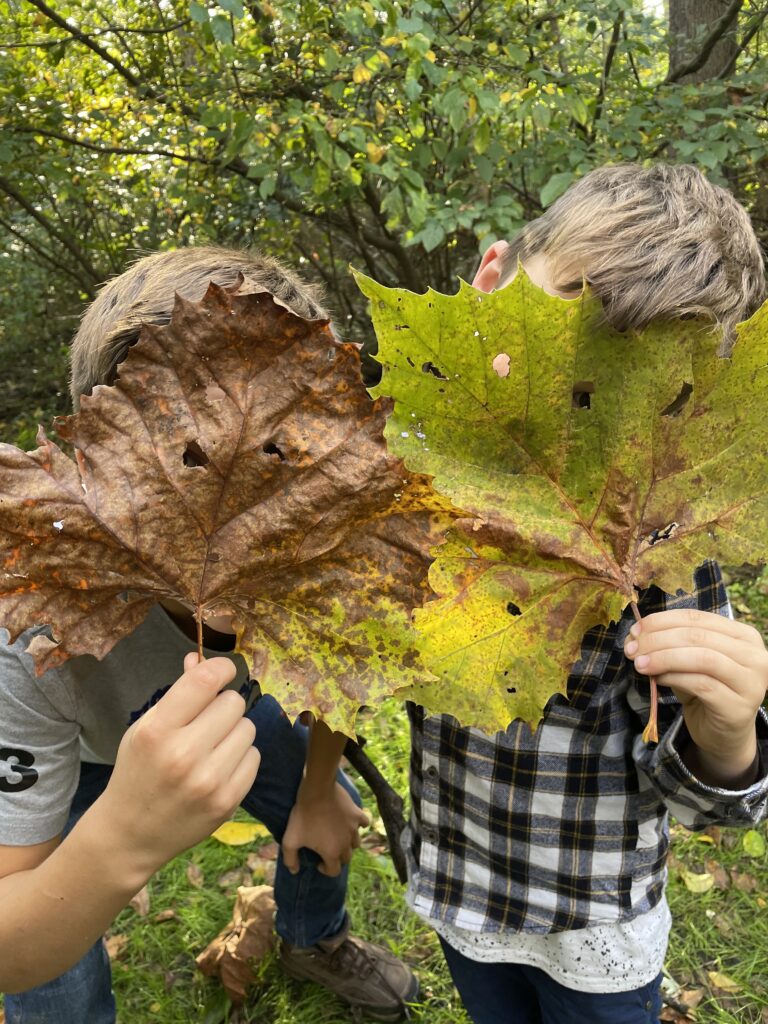
Point out their words on paper then allow them to add to their journal entries according to their comfort levels. This might be a photograph, a tangible object—such as, a pressed flower or leaf, or a freehand drawing.
Perhaps they would be interested in following a step-by-step online drawing tutorial or published book to draw what caught their attention on the nature walk. Here are a few links to online drawing tutorials and books that I have found helpful:
- How to Draw Animals for Children
- How to Draw Plants
- Laws Guide to Nature Drawing and Journaling
- Art Hub for Kids – Animals
For those children who are proficient in copying yet have difficulty generating ideas, write their narration on a separate piece of paper and have them copy it into their journal. Adding lines, using LegiLiner or Woo Tape, on plain white paper provides visual cues for copy work.
Have them then decorate the page with watercolors, drawings, or colorful borders. If even narration is laborious, consider reading a poem about nature and choose a few lines that reflect what was experienced that day outside to use as copy work.
For those children whose writing needs complexity, encourage them to include what they know from their other subjects and background knowledge they have. Perhaps they recall a related poem or quote. Perhaps they recall a science experiment or fact learned.
For example, our middle and high school students observed how elements of nature related specifically to their physical science studies. Some wrote about falling leaves reflecting gravity while others researched then drew the size of a root-ball needed for a tree to resist the force of wind as its canopy grew.
Another drew bird poop falling then splattering because of the opposing force of the ground. Yet another drew a bird’s wingspan and determined the amount of force required with each flap to raise the bird higher in the sky. The possibilities of comparisons and correlations are endless.
Nature journaling is a great way to add some creativity to your writing routine as a family. And a great excuse for outdoor adventures. A natural outworking of observation skills and an easily adaptable activity across abilities and grade levels.
Announce a surprise outing on your next warm weather day! Have everyone gather their walking shoes, notebooks, snacks, and watch for those smiles on the faces of your children as you head outdoors. And you too can smile knowing you are building communicators and writers.