Motor Planning in the Homeschool
Motor planning is the ability to conceive, plan, and carryout a new motor act. My favorite example is curling your hair with a new curling iron using a mirror. When first looking, its somewhat disorienting. You have to consciously think about which way to move the arm, practice, and then can typically create a beautiful hairstyle. For some, this comes easily, for others, it takes practice and deliberate conscious planning.
Within the homeschool day, difficulties with motor planning can manifest themselves in many different ways. A person must plan their actions as soon as they get out of bed in the morning. This means dressing and cooking breakfast are some of the first ways to influence the development of coordination and motor planning.
Motor Planning at the Breakfast Table
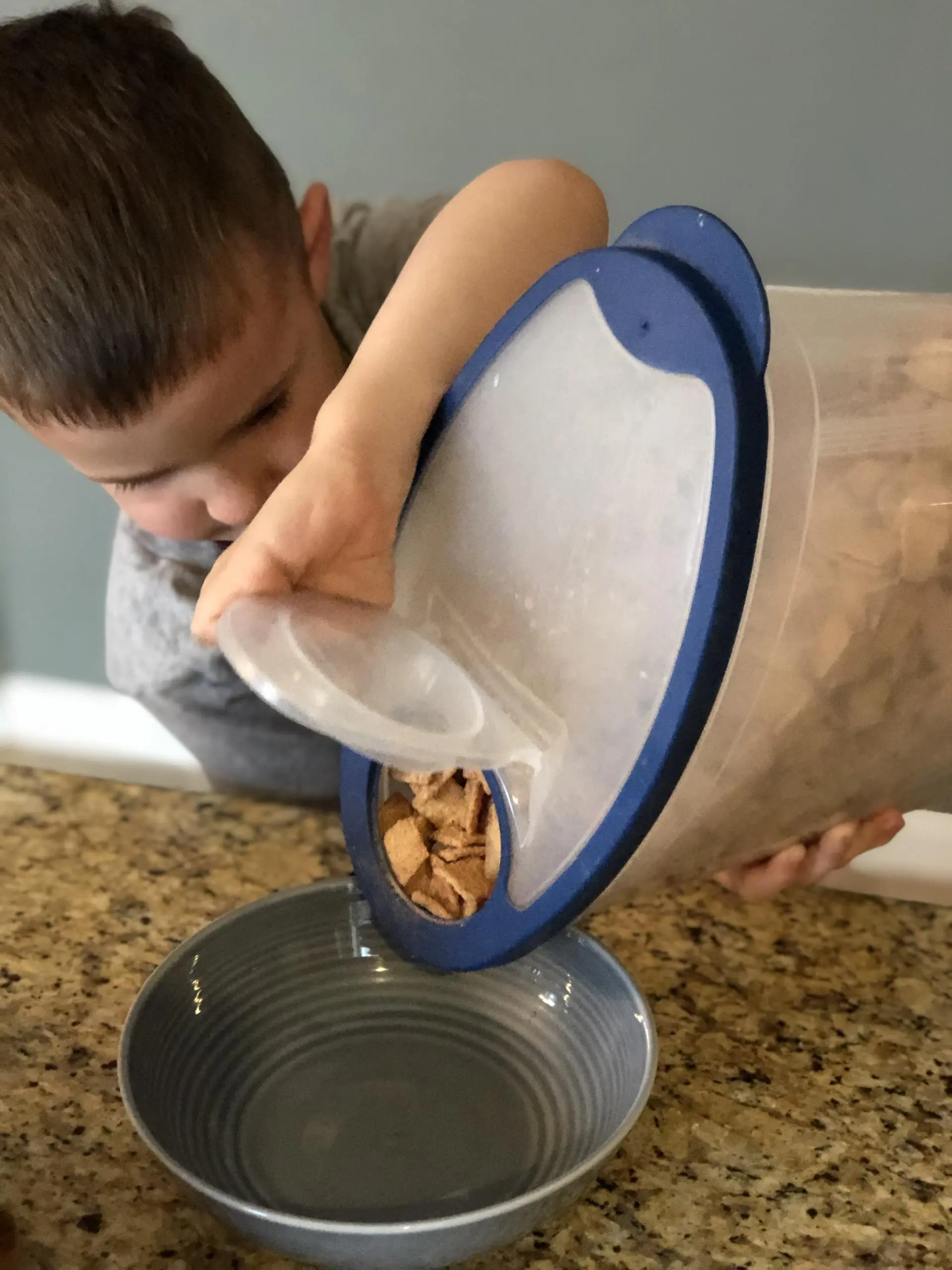
Each of my children prepare their breakfasts first thing. Placing ingredients in easy to handle containers ie cereal in a small container or milk pre-poured give independence within a skill level. Cracking eggs using the correct amount of pressure or stirring without sloshing are two other areas we’ve encouraged independence just by placing bowls within a sink or using huge bowls to stir small amounts. As the kids become more proficient, you can remove these safeguards.
Handwriting builds motor planning skills
Handwriting and fine motor skills are one of the most difficult aspects of the school day when a child has difficulty with motor planning. I had the pleasure working with Dr. Amy Sadek, owner of OT learning lab. She speaks of the importance of knowing the words of directionality ie top, middle, bottom, left, right, over, and under for correct letter, number, and shape formation, but also for overall motor planning skills and spatial awareness. She has developed handwriting interactive videos to help teach these concepts and other handwriting components.
Ways we can help our children with motor planning
1) Spending lots of time outside-
Time outside not only allows for nature study and other free play, but it encourages children to naturally engage their bodies. They have to take risks on how to climb a tree, change their footing when going down a hill, or even balancing on a rock. As parents and home educators, we often don’t want to let our children fail. However, independently coming up with the movement, completing the movement, and then self evaluating are all aspects of motor planning that require risk taking and permission to fail. Learning how to verbally cue or set up environments with safeguards is one way Collins Academy Therapy Services can help.
2) Obstacle courses –
Maneuvering over, under, and around obstacles encourage motor planning. Sometimes I give specific ideas for the courses, sometimes I have them make them up on their own.
3) Games–
Finally, here are some fantastic games that incorporate motor planning. (affiliate links)
- 1. Simon
- 2. Robot Turtles
- 3. Kids Charades
- 4. Left Right Center
- 5. Jenga
Part of the reason that I love being an occupational therapist consulting with homeschoolers is that it allows me to explain my thinking behind what we do at home with our own kids all while influencing other families.

References:
- American Occupational Therapy Association. (2020). Occupational therapy practice framework (4th ed.). American Occupational Therapy. https://doi.org/10.5014/ajot.2020.74S2001
- Wilson, B.N., Crawford, S.G., Green, D., Roberts, G., Aylott, A., & Kaplan, B. (2009). Psychometric Properties of the Revised Developmental Coordination Disorder Questionnaire. Physical & Occupational Therapy in Pediatrics, 29(2):182-202.
- Sadek, A (2020, May). Personal communication [interview].