
The Art and Science of Repetition in our Homeschool
In his book Grasp: The Science Transforming the Way We Learn, Sanjay Sarma writes about the science of learning; he writes about spacing of learning. Revisiting, or repetition of, material frequently with low stakes and applying knowledge within context affects development even at the cellular level. It’s fascinating, but knowing the science isn’t all we focus on as homeschooling families. We have the privilege of applying these concepts to our specific students. THIS IS ART.
In college, I was notorious for cramming (revisiting information with high stakes) for exams. I remember spending twenty-one hours straight in the library before my anatomy and physiology exam. Most of the information I had to then relearn in graduate school. Was that really effective? It was effective for a grade and for exposure so that I could then pick it up faster the next time I studied it; however, if that exam was the end of my anatomy studies, I probably wouldn’t retain the difference between a femur and a tibia.
Examples of repetition and learning in our homeschool
- Drawing maps = repetition
- Relating current events to what was learned in geography = context
- Using Quizlet app for Latin vocabulary and geography = repetition
- Finding and comparing terms we learn in books = context
- Drawing, labeling, and talking about the parts of the body = repetition
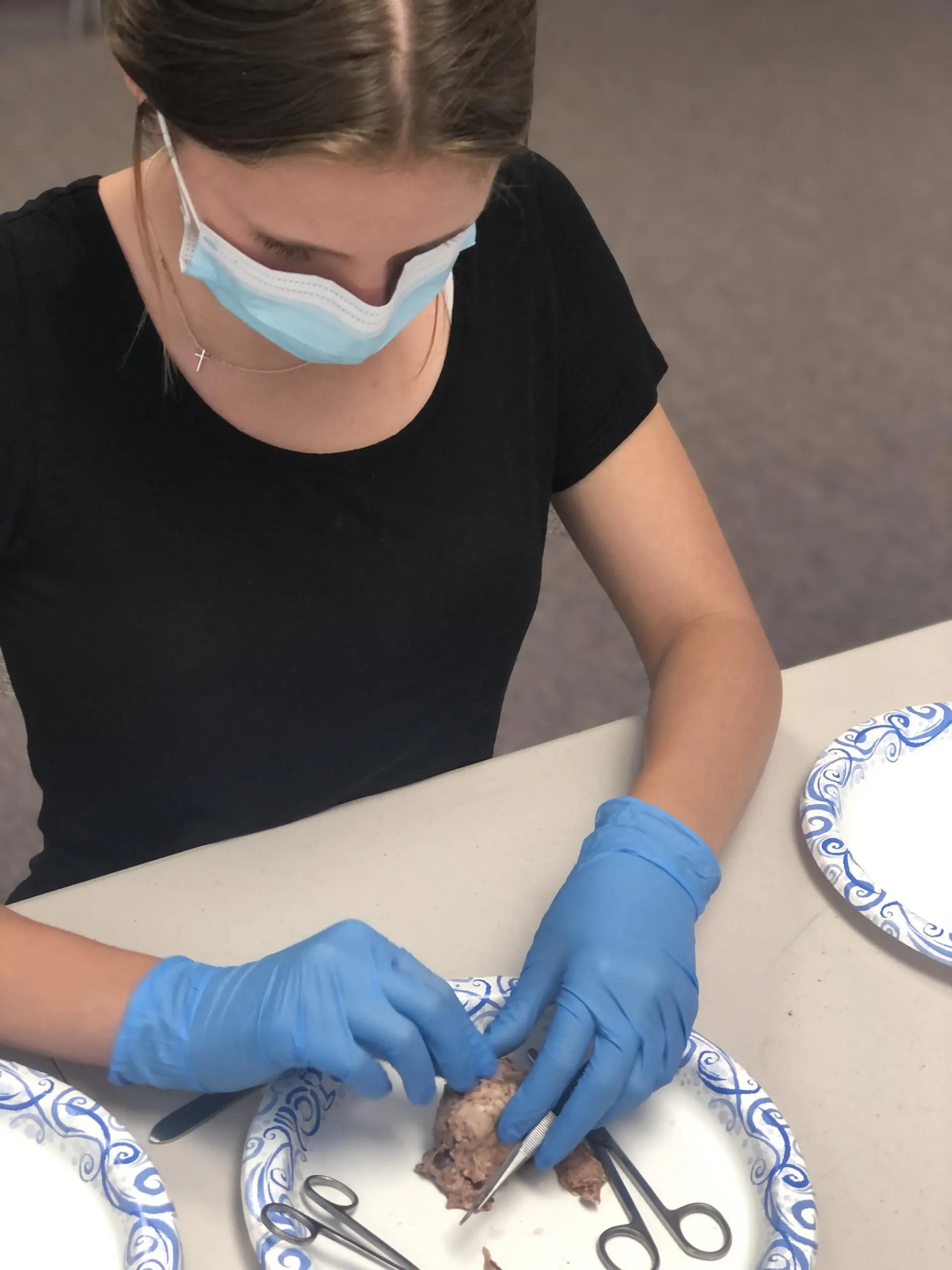
- Dissecting = context
All of these subjects had low-stakes quizzes throughout the year. The final exam was long but celebratory!! She drew six of seven continents in one hour; she wrote a persuasive essay; she drew models of seven body systems; she identified fallacies; she completed math word-problems; and she translated Latin vocab and declensions. She totally exceeded my expectations.
Teaching mixed ages lends itself to repetition
One of the most common questions I receive as an occupational therapist and homeschool mom is, “how do you teach everyone together?” First, it’s important to note that age-segregated classrooms have only been the norm for about 3 generations. So, we are not the first people encountering this question. And, teaching mixed ages was a successful norm for longer than it has been questions.
My answer if repetition. If we are learning anatomy together now, it may be one child’s first time so memorizing and labeling body parts is exciting and novel. They may also watch as an older brother or sister delves deeper by reading books more in depth on body systems. They may also label body parts as an even older sibling dissects a sheep’s eye (yes, this is available for homeschools!) Repeating allows us to go deeper because as information is recalled, we can build on it.

References
- American Occupational Therapy Association. (2020). Occupational therapy practice framework (4th ed.). American Occupational Therapy. https://doi.org/10.5014/ajot.2020.74S2001
- Sarma, S. (2020). Grasp. New York: Doubleday.


I agree with the repetition. I always learned “spiral curricula” meaning there’s always overlap and building on something that’s been introduced before.
I’m so proud of your work!