Three Overlooked Aspects of Handwriting
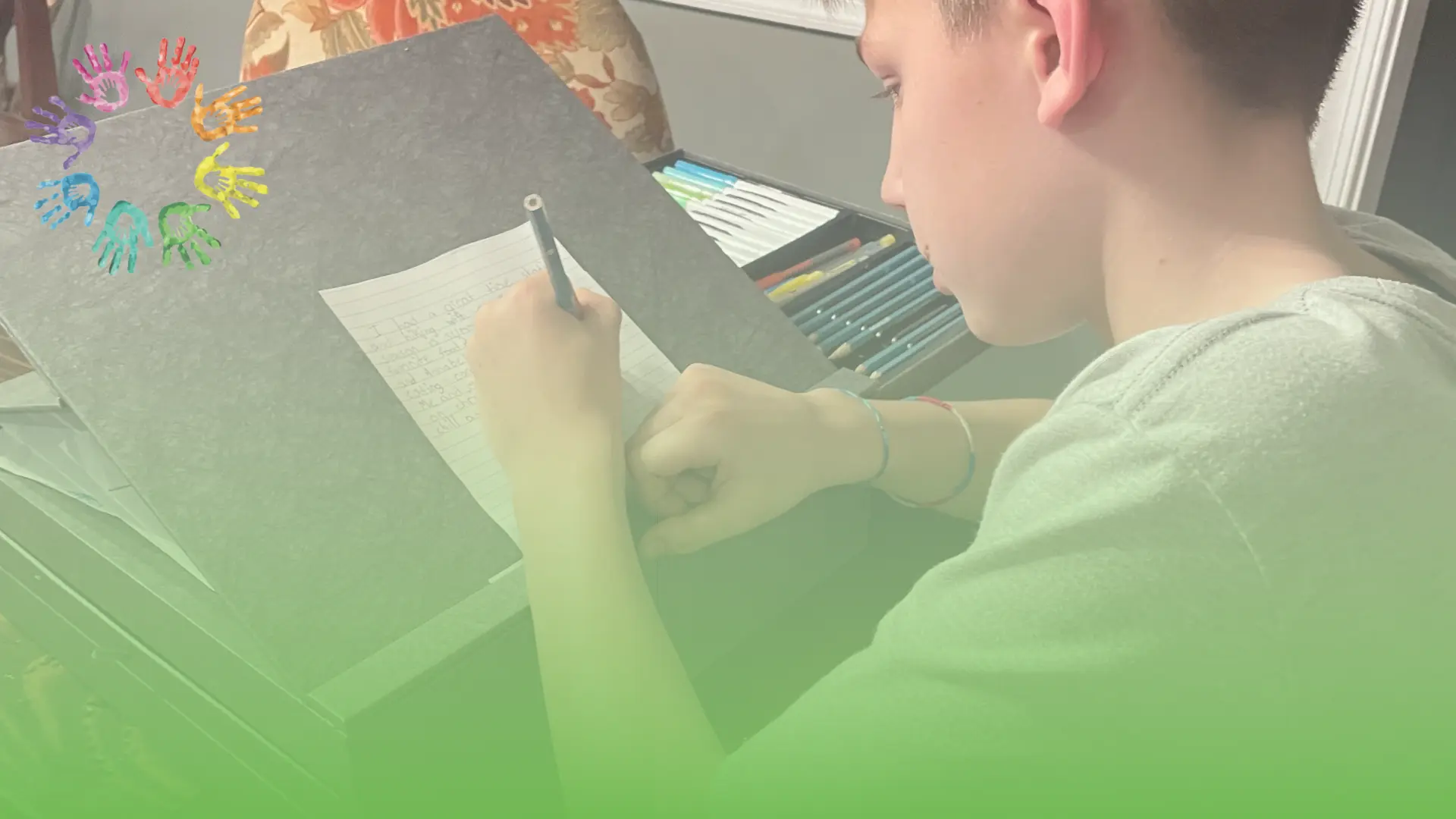
The number one question homeschool families ask me as an occupational therapist is, “How do I help my children with their handwriting?” Many of these families have tried all sorts of fine motor skill activities and even different curriculums.
Three frequently overlooked aspects of handwriting:
- Motivation
- Overall strength and coordination
- Visual skills
Motivation
When we drill handwriting strokes and our children are fighting it, handwriting can turn into a tedious task. To make it more exciting, our children need to understand the why. In our homeschool, nature journaling made my boys want to communicate using the written word. They felt valued and wanted to express what they saw, heard, and touched.
Here are some ways to make written communication easier:
- Narration- They would speak aloud their thoughts while I wrote them down.
- Copy- They narrated to me; I wrote; then they copied.
- Drawing only
- Writing- They documented original thoughts to go with a picture or photo.
Overall strength and coordination-
An old occupational therapy adage is “proximal strength allows for distal mobility.” This basically means that good core and shoulder strength create freedom in finger movement. Children without the necessary core and shoulder strength often complain of hand pain or tired arms.
Their handwriting will likely improve with less focus on actual writing and more focus on play and exercise that encourages upper body strengthening. Climbing trees, building obstacle courses, completing heavy work chores, practicing yoga, and participating in sports are all options to build overall strength and coordination.
Visual skills-
Writing requires eyes to visually scan the paper from left to right. Copying also often requires a shift in focus from something far away to paper close up. An interview with functional vision doctors here and information about our specific story here can help to explain this a little more.
Homeschool OT provides an in-depth focus group on these and other skills needed for handwriting, definitions of dysgraphia, products and curriculums to help with handwriting, and assistive technology to compensate. Join the next focus group here.
References
(updated 4/17/2021):
- American Occupational Therapy Association. (2020). Occupational therapy practice framework (4th ed.). American Occupational Therapy. https://doi.org/10.5014/ajot.2020.74S2001
- College of Optometrists in Visual Development. (2021). Vital Visual Skills. https://www.covd.org/page/Visual_Skills
- Dotterer, Cheri. (2018). Handwriting Brain-Body Disconnect. Author Academy Elite.